12 min read
467 vistas
Colca Hot Springs: Where to Go, Prices and Travel Tips
The Colca hot springs are one of the most relaxing experiences to include during a trip to the...
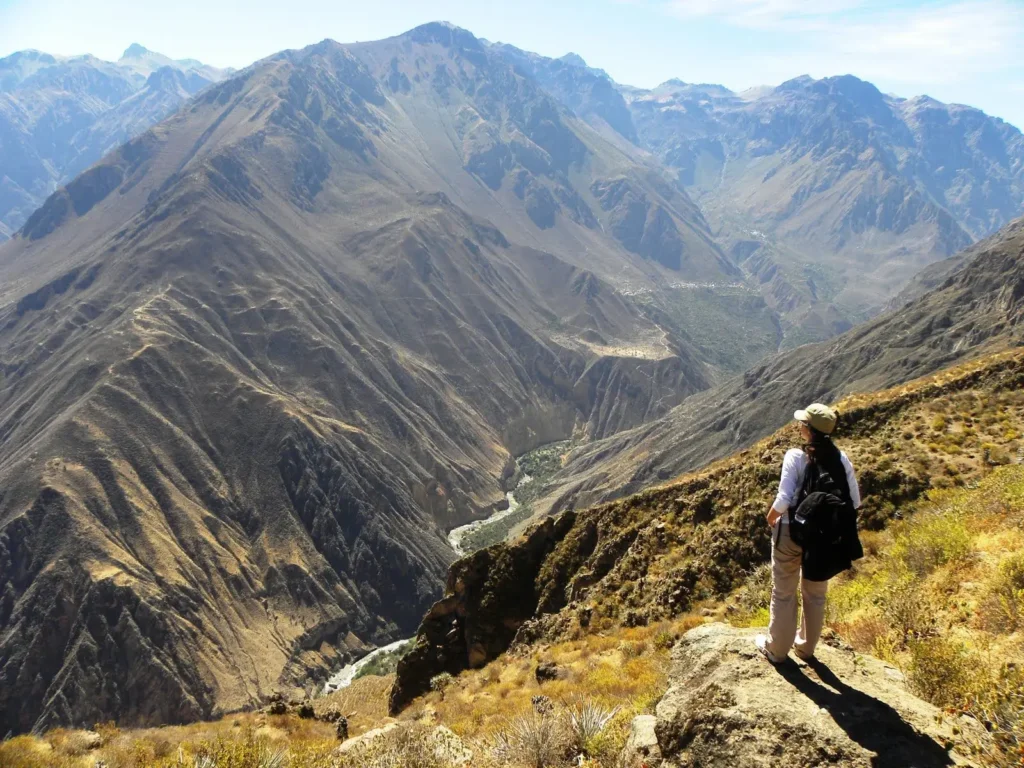
Leer articuloColca Canyon is one of those places that makes you go quiet for a moment. Walls drop thousands of meters to a thread of river, ancient farming terraces cling to the slopes and, if you arrive early on a good day, Andean condors glide just a few meters from where you stand.
It sits about four hours from Arequipa, so it fits almost any southern Peru itinerary. This guide shows you how to visit Colca Canyon without improvising: what to see, how to get there, when to go and how many days you really need.
Colca Canyon lies in the Caylloma province, in the northeast corner of the Arequipa region. The Colca River carved it over millions of years between towering snow-capped peaks such as Ampato (6,310 m / 20,700 ft) and Coropuna (6,425 m / 21,080 ft).
Its maximum depth is around 3,270 meters (10,730 ft), the figure most often quoted. For years it was billed as the deepest canyon in the world. Today it is known that its neighbor, Cotahuasi Canyon, is deeper at roughly 3,535 meters. But Cotahuasi is remote and hard to reach, while Colca is the one you can visit comfortably, condors included.
What sets Colca apart is not just its size. It is an inhabited valley. Long before the Incas, the Collagua and Cabana peoples shaped the slopes into terraces that are still farmed today. The villages keep their colonial churches, traditional dress and dances such as the wititi, which comes from this valley.
If you want to place the canyon within a wider route, our Arequipa & Colca guide helps you combine the city and the valley.
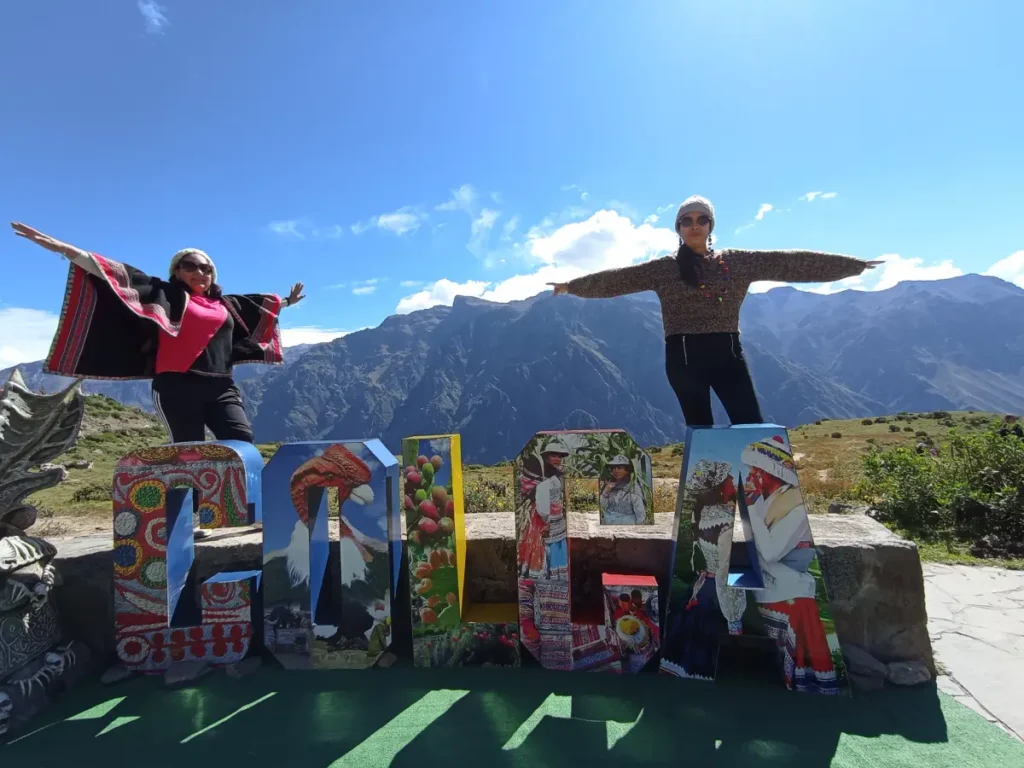
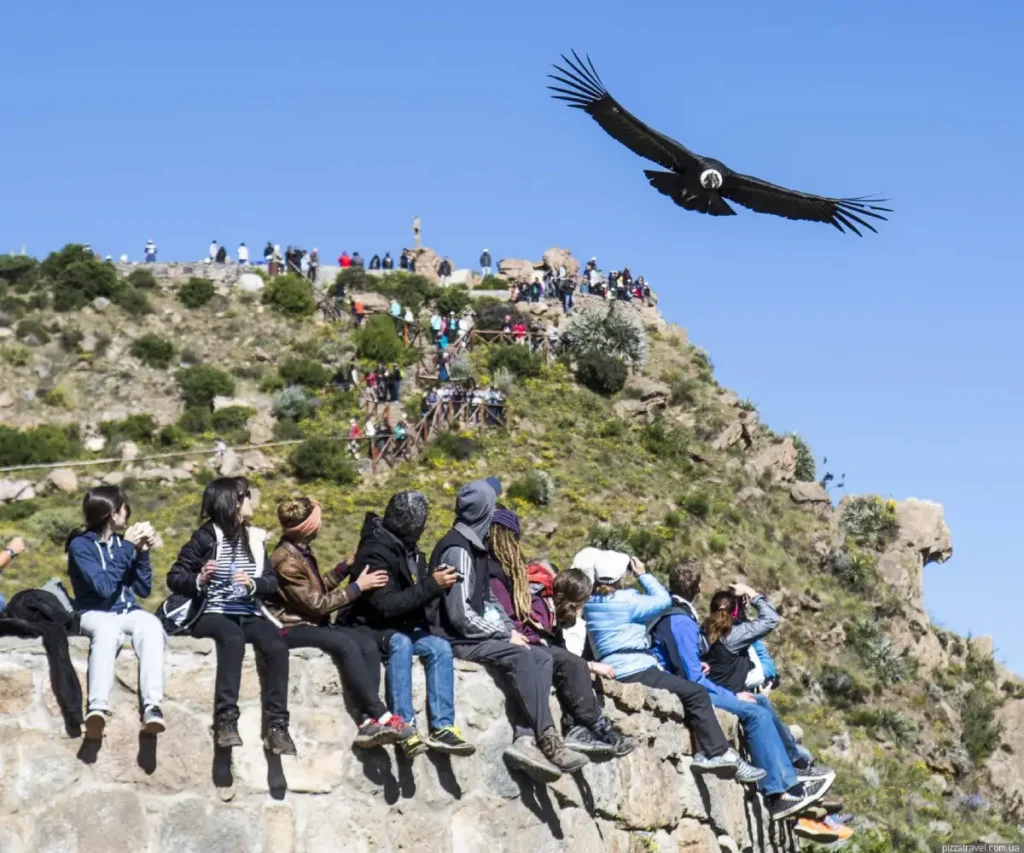
The Cruz del Condor viewpoint is the reason most travelers come to Colca. It sits on the upper rim of the canyon near Pinchollo and Cabanaconde, at roughly 3,700 meters (12,100 ft) above sea level. From the railing you watch the canyon wall fall away into the void and, with luck, an Andean condor drifting past.
The Andean condor is the largest flying bird in the world, with a wingspan that can exceed three meters. It is a threatened species, so seeing one in the wild is a real privilege.
Condors ride the warm air that rises through the canyon once the sun heats the walls. That is why the best time to see them is in the morning. The sources we consulted put the window between 7:00 and 10:00 a.m., and the most reliable stretch is usually 8:00 to 9:00.
Tours from Arequipa arrive around 8:30, which is a good moment. If you sleep in the valley, you can reach the viewpoint earlier and pick your spot calmly.
Four tips for condor watching:
No serious operator can guarantee condor sightings. With patience and a clear morning, most visitors see them.
The canyon is only part of Colca. The valley has villages, viewpoints and stops that deserve your time.
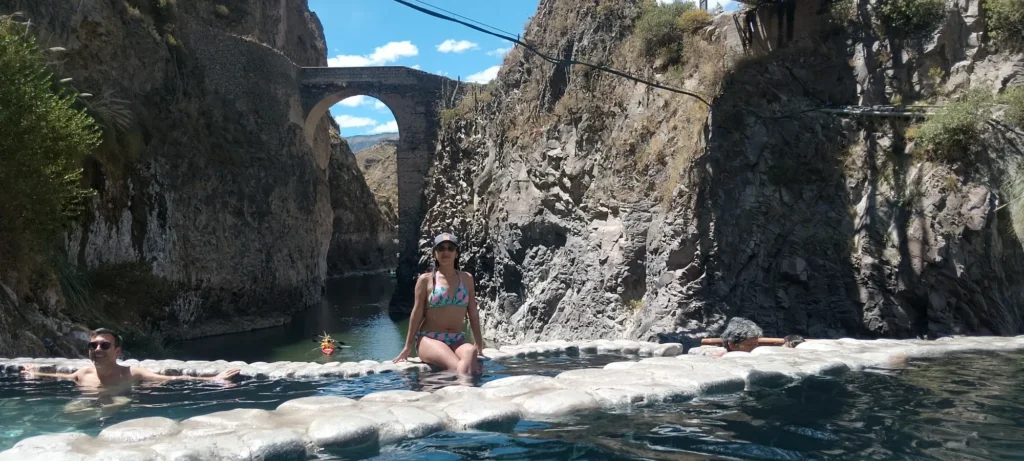
Chivay. The provincial capital and gateway to the valley, at about 3,635 meters (11,925 ft). It has a market, restaurants and the best choice of hotels. A few kilometers away are the La Calera hot pools. We cover them in our guide to the Colca hot springs, ideal for unwinding after a day on the road.
Yanque, Coporaque and Maca. Villages with colonial churches, quiet squares and terraces all around. In Yanque there are often folk dances in the morning.
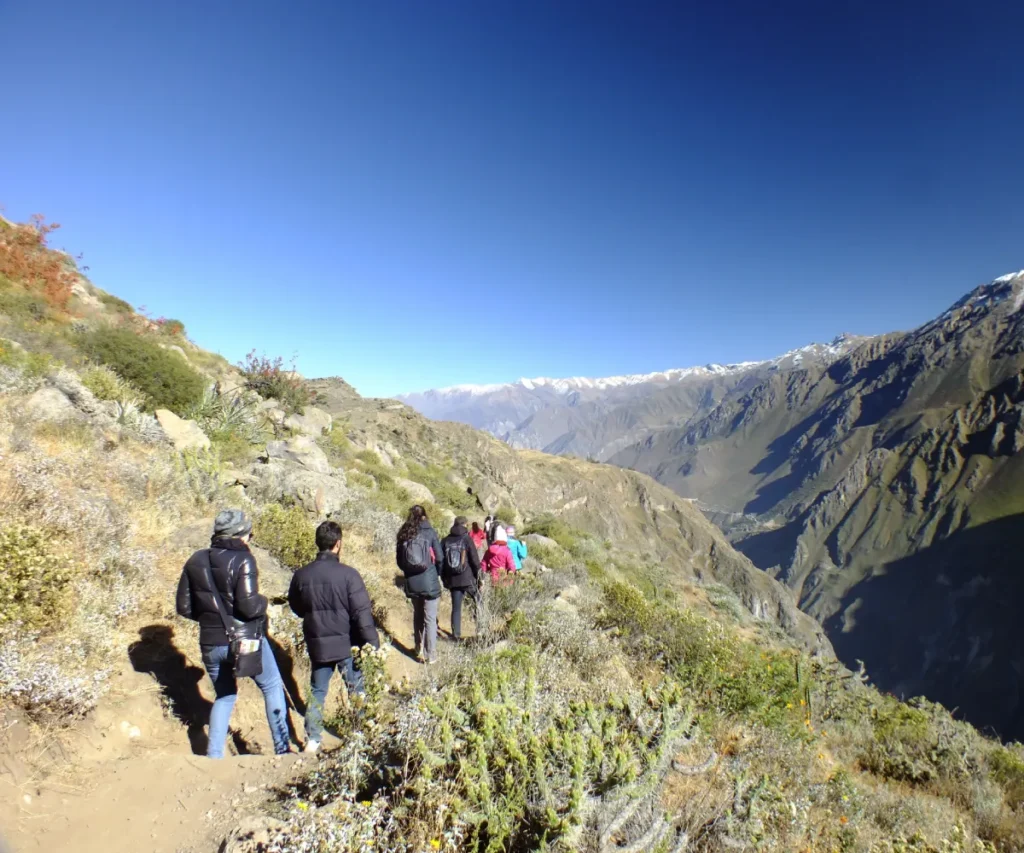
Pinchollo and Cabanaconde. The villages closest to Cruz del Condor. Cabanaconde is the starting point for the trek down to the Sangalle Oasis, a descent of more than a thousand meters to the canyon floor.
Antahuilque and Choquetico viewpoints. From here you see the terraces and the pre-Inca tombs set into the canyon wall.
Mirador de los Andes (Patapampa). The highest point on the route, at about 4,910 meters (16,100 ft). On clear days you can see the Ampato, Sabancaya and Hualca Hualca volcanoes.
Pampa Cañahuas. Part of the Salinas y Aguada Blanca National Reserve, where herds of vicuñas are a common sight, along with alpacas and llamas.
If your dates line up, the Fiesta de la Cruz in early May fills the valley with processions, music and dance.
Most travelers visit Colca from Arequipa, which sits at 2,335 meters (7,660 ft). If you have not yet planned your arrival in the city, read our guide on how to get to Arequipa.
The distance to the valley is roughly 160 to 200 kilometers depending on the stop, and the drive takes three to four hours to Chivay. The road climbs through Yura and crosses the Aguada Blanca reserve. It passes Pampa Cañahuas and the Patapampa viewpoint, then drops down to Chivay.
You have three ways to do it:
You pay a tourist ticket to enter the valley. For adult foreign visitors, the rates published by local operators are 70 soles. A reduced rate of 40 soles applies to children aged 10 to 17 and to residents of Andean Community countries, and children under 10 do not pay. The ticket covers the viewpoints and main attractions and is valid for two days. Some tours include it and others do not, so confirm when you book. Rates can change.
You can visit Colca all year, but not every month is equal.
Dry season (April or May to November). This is the most recommended. Skies are clear, views of the canyon and volcanoes are better, and the road is safer. Nights are cold, and in Chivay temperatures can drop below freezing in midwinter, so pack warm clothes.
Rainy season (December to March). The terraces turn green and the scenery is highly photogenic. In exchange, expect clouds, afternoon rain and a higher risk of landslides. It is also the season for rafting and kayaking on the river.
Condors can be seen year-round. The dry season usually offers better odds of clear skies and longer flights.
It is the most common question: Colca canyon, how many days? It depends on your time and how much you want to walk.
| Full day (1 day) | 2 days / 1 night | |
|---|---|---|
| Departure from Arequipa | Between 2:30 and 3:30 a.m. | Morning, no extreme early start |
| Cruz del Condor | Arrival around 8:30 a.m. | Relaxed visit at dawn on day two |
| Hot springs | Optional and rushed | Unhurried, on arrival in Chivay |
| Return | Between 5:00 and 6:00 p.m. | Mid-afternoon on day two |
| Pace | Intense: many hours on the bus | More relaxed |
One day (full day). The quickest way to see Colca. You can see the canyon and the condors and make several stops. It is a long day, with around eight hours on the road. A good option if your time in Arequipa is limited.
Two days. Our recommendation for almost everyone. You sleep in Chivay or another valley village, reach Cruz del Condor without rushing and have time for the hot springs, the villages and the vicuñas. You also adjust to the altitude better than on a whirlwind trip.
Three days or more. If you like to hike, add the trek to the Sangalle Oasis from Cabanaconde and sleep inside the canyon. It is demanding, with a descent of more than a thousand meters and a tough climb out, but it is the best way to feel Colca from the inside.
Colca is high. Arequipa is at 2,335 meters, Chivay at about 3,635 and the highest point on the route tops 4,900. That change in altitude within a few hours is what affects travelers most.
To prevent altitude sickness, spend a day or two in Arequipa before going up, drink water, skip alcohol the first night and walk slowly. Coca tea helps many travelers. If you have heart or respiratory problems, check with your doctor first.
What to put in your daypack:
At Aura Travel Experience we design routes through southern Peru that combine Arequipa, Colca and the rest of the country, with local guides and a pace that suits you. Explore our Peru packages and write to us to tailor your itinerary.
Ready to watch condors fly? Add Colca to your trip and travel with people who know every bend in the road.
También te puede interesar
The Colca hot springs are one of the most relaxing experiences to include during a trip to the...
Leer articulo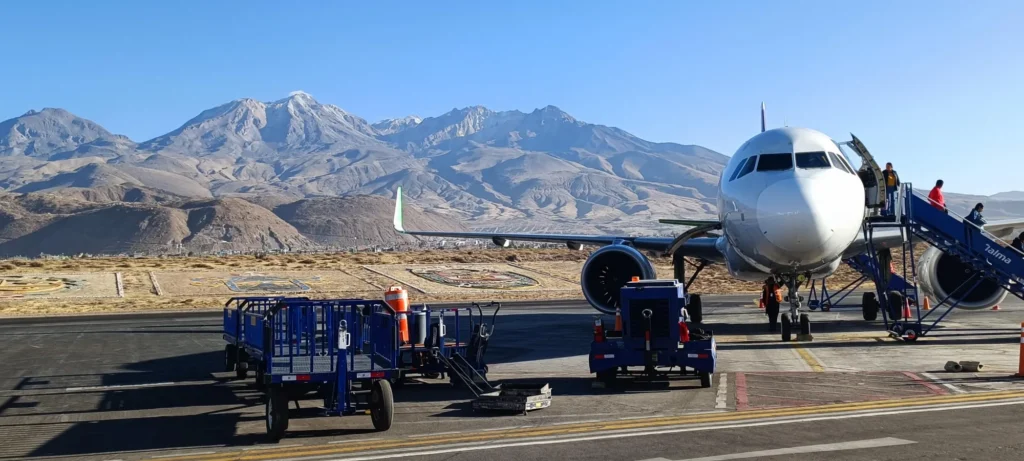
Hello, bloggers. If you’re planning a trip through Peru, figuring out how to get to Arequipa is a...
Leer articulo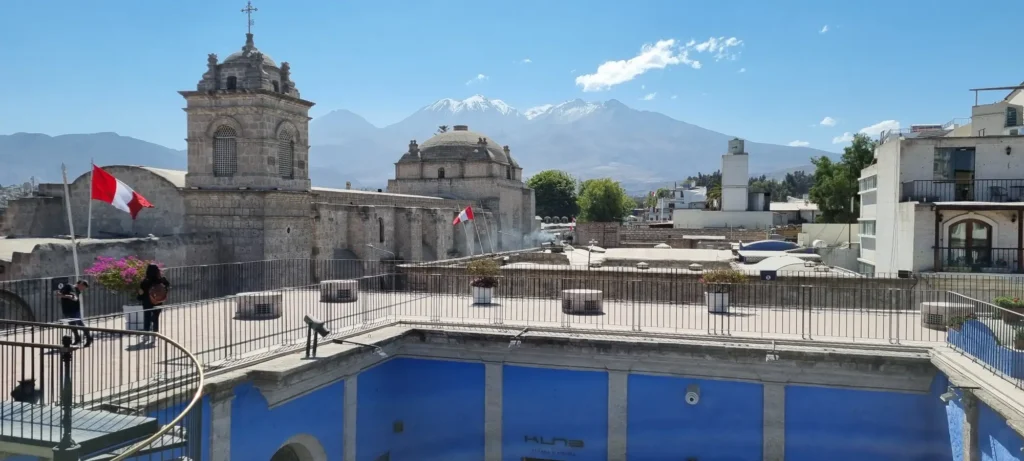
Hello, bloggers. In the world of Arequipa tourism, few destinations balance elegance, history, and dramatic landscapes as effortlessly...
Leer articulo