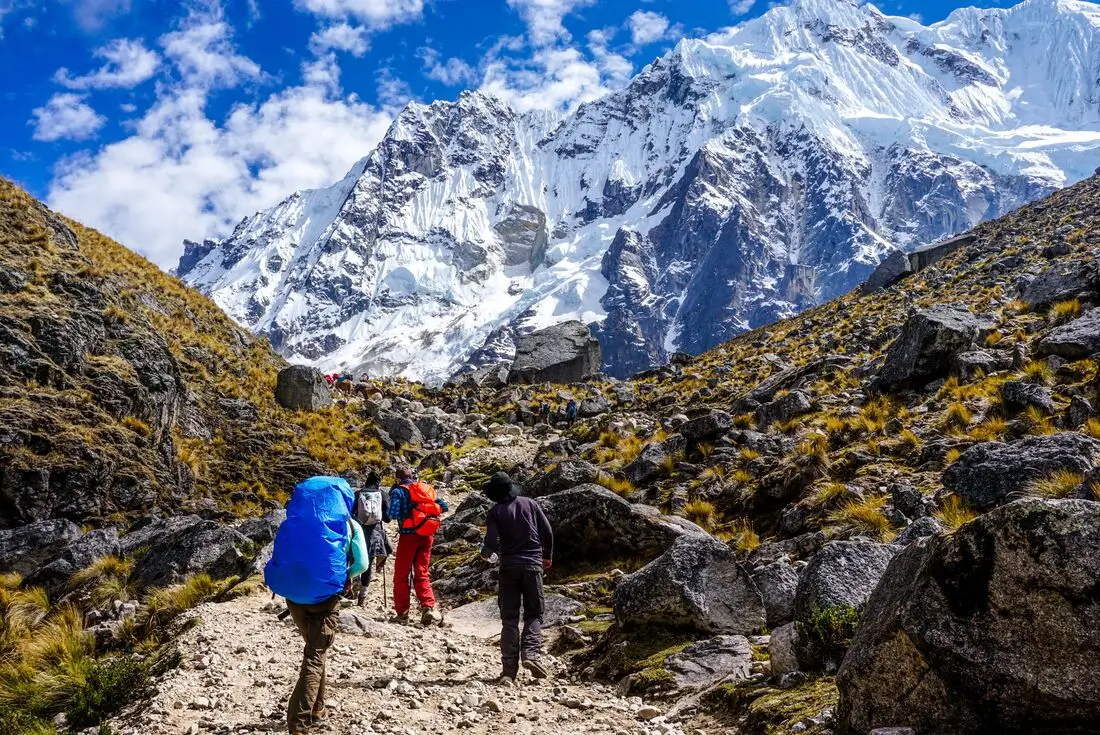
The Salkantay Trek is the most famous alternative to the Inca Trail and, for many travelers, the best way to reach Machu Picchu on foot. National Geographic named it one of the world’s top hikes, and it earns the title: in just a few days you cross glaciers, turquoise lakes, cloud forest and high jungle, with the towering Mount Salkantay watching over you. If the classic Inca Trail is sold out — or you simply want something wilder — this is your route.
At Aura Travel Experience we run the Salkantay year-round, so we wrote this guide to answer the real questions travelers ask us every week: how many days you need, how hard it truly is, when to go, what it costs, and how to book. Let’s take it step by step.
What is the Salkantay Trek?
The Salkantay Trek is a mountain route that links Cusco to Machu Picchu by circling the Apu Salkantay — a sacred 6,271 m peak considered a guardian of the citadel. The classic route covers about 70 km over five days, crossing its highest point — the Salkantay Pass at 4,630 m — before descending into cloud forest.
Its big advantage over the Inca Trail is simple: it doesn’t require the limited permit that sells out months ahead. That gives it far more booking flexibility, even at short notice, and allows daily departures all year long.
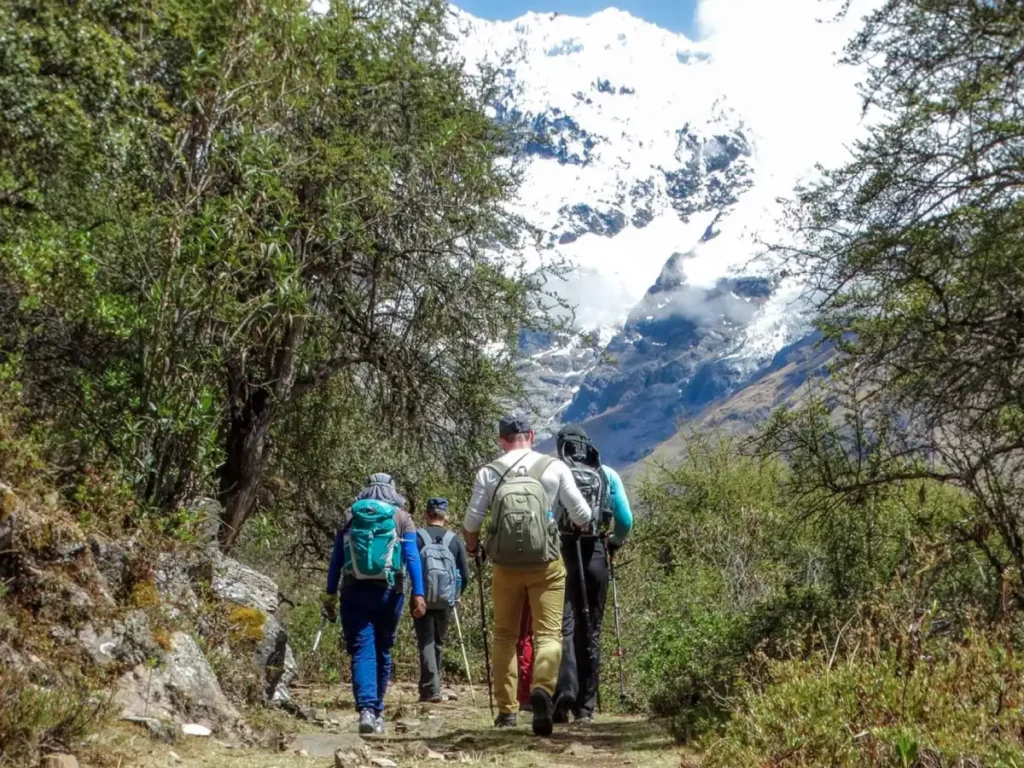
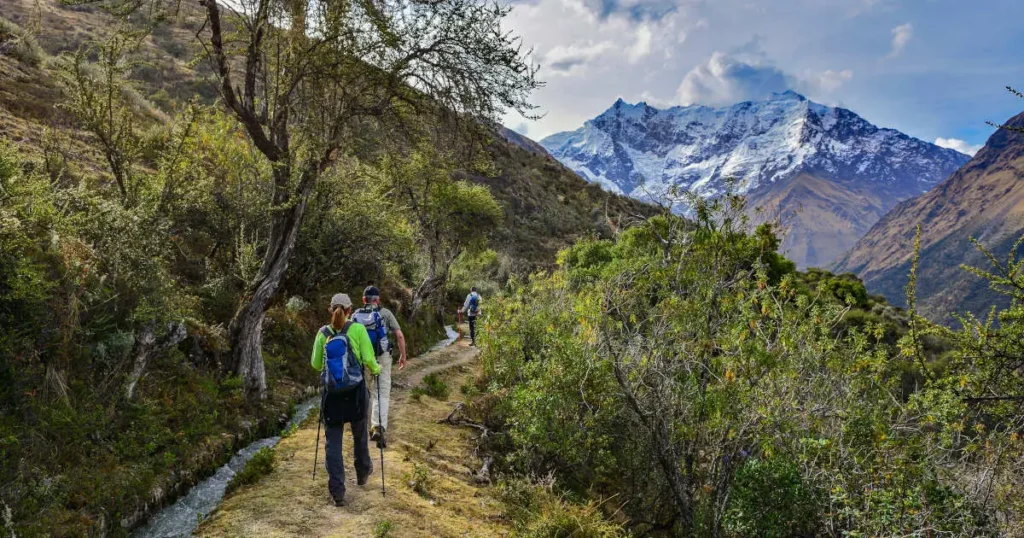
What makes this route special is its variety. In just five days you pass through five distinct ecosystems: from the glaciers of Salkantay to the coffee plantations of Lucmabamba, by way of Andean high plains, cloud forest and high jungle. Few treks in the world change scenery so dramatically in so little time.
One thing to clear up early: the Salkantay doesn’t enter Machu Picchu through the Sun Gate like the Inca Trail. Here you reach the citadel from Aguas Calientes on the final day, after a longer, more rugged mountain journey. To get your bearings in the region, our Cusco travel guide is a good companion to this page.
Routes and durations
Everyone says “the Salkantay” as if it were a single route, but there are several versions depending on how many days you want to walk and what combination you’re after. Choosing the right one shapes your pace, your budget and your experience.
Salkantay Trek 5 days (classic)
This is the flagship version and the one we most recommend. The Salkantay Trek 5 days covers the full route over five days and four nights, with Humantay Lake on day one, the Salkantay Pass on day two, and a gradual descent through cloud forest and jungle to Machu Picchu.
This itinerary has the best balance: enough time to acclimatize along the way, enjoy each ecosystem without rushing, and reach the citadel with energy to spare. It’s ideal if you want the full Salkantay experience.
Salkantay Trek 4 days
The Salkantay Trek 4 days is the more compact version, built for travelers with less time who don’t want to miss the big highlights: Humantay, the pass and Machu Picchu. The daily stages are a little longer, so it demands a good pace, but it condenses the essence of the route into one fewer day.
Salkantay + Inca Trail 6 days
For those who want the best of both worlds, the Salkantay + Inca Trail 6 days combines the wild high mountains of the Salkantay with the final stretch of the Inca Trail, entering Machu Picchu through the Sun Gate. It’s the most complete and epic route in the cluster: high-mountain landscapes, ruins, and the classic arrival that only the Inca Trail offers.
Not sure which version to pick? Tell us how many days you have and your fitness level, and we’ll recommend the best option — no obligation.
Talk to a specialist See the 5-day Salkantay Trek
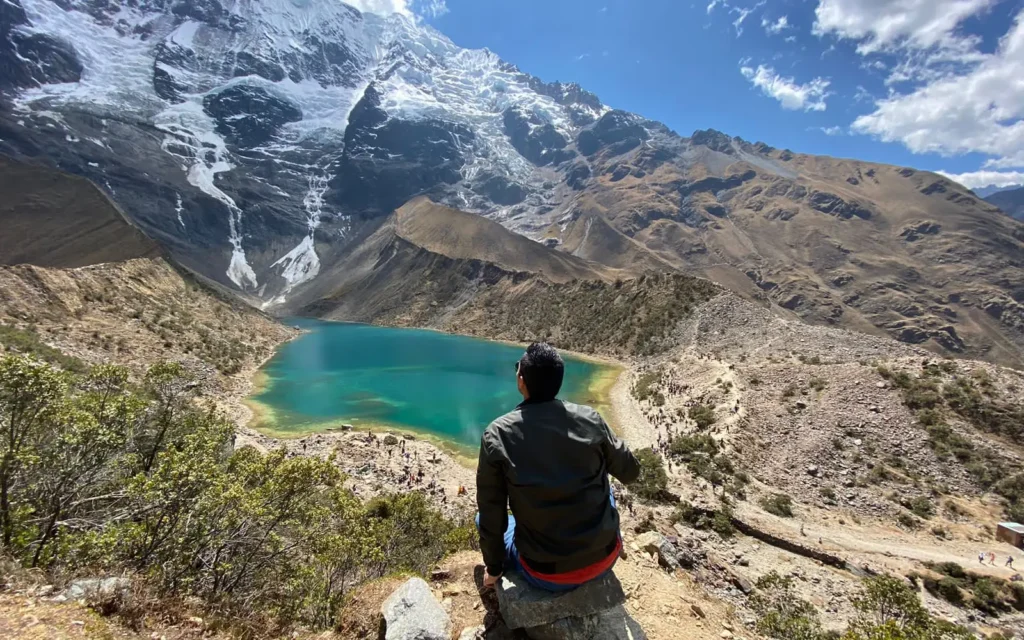
Humantay Lake on the route
If one image sums up the Salkantay, it’s Humantay Lake: a mirror of turquoise water at around 4,200 m, ringed by glaciers, visited on the first day of the trek. Many people know it from day tours out of Cusco, but seeing it within the longer route, in the mountain silence, is something else entirely.
The intense color comes from glacial meltwater off Mount Humantay, rich in minerals. The climb up from Soraypampa is short but demanding because of the altitude, so it’s taken slowly. It’s also an excellent first acclimatization test before pass day.
If you want to go deeper, we have dedicated guides on how to get to Humantay Lake and the best time to visit Humantay Lake, useful whether you see it within the trek or on its own.
Best time for the Salkantay Trek
Weather shapes the experience a lot. Peru’s southern highlands have two clear seasons, and the difference shows on the trail.
Dry season (April to October) is the best time and the most popular. Clear skies, crisp views of the snow peak, and firm paths. The trade-off: nights at altitude are bitterly cold, dropping below freezing at the high camps. June, July and August offer the most reliable conditions.
Rainy season (November to March) brings greener scenery and fewer people, but also mud, slippery sections and frequent rain. Unlike the Inca Trail, the Salkantay doesn’t close in February, so you can hike it year-round — you just need to be prepared for the wet.
The shoulder months — April, May, September and October — tend to be the sweet spot: good weather with thinner crowds. You can see more detail in our comparison of the dry and rainy season in Peru.
Difficulty and altitude
Let’s be honest, because this is the question we get most. The Salkantay Trek is challenging — a bit tougher than the classic Inca Trail in terms of effort and altitude, though less technical than routes like Huayhuash or the Cordillera Blanca.
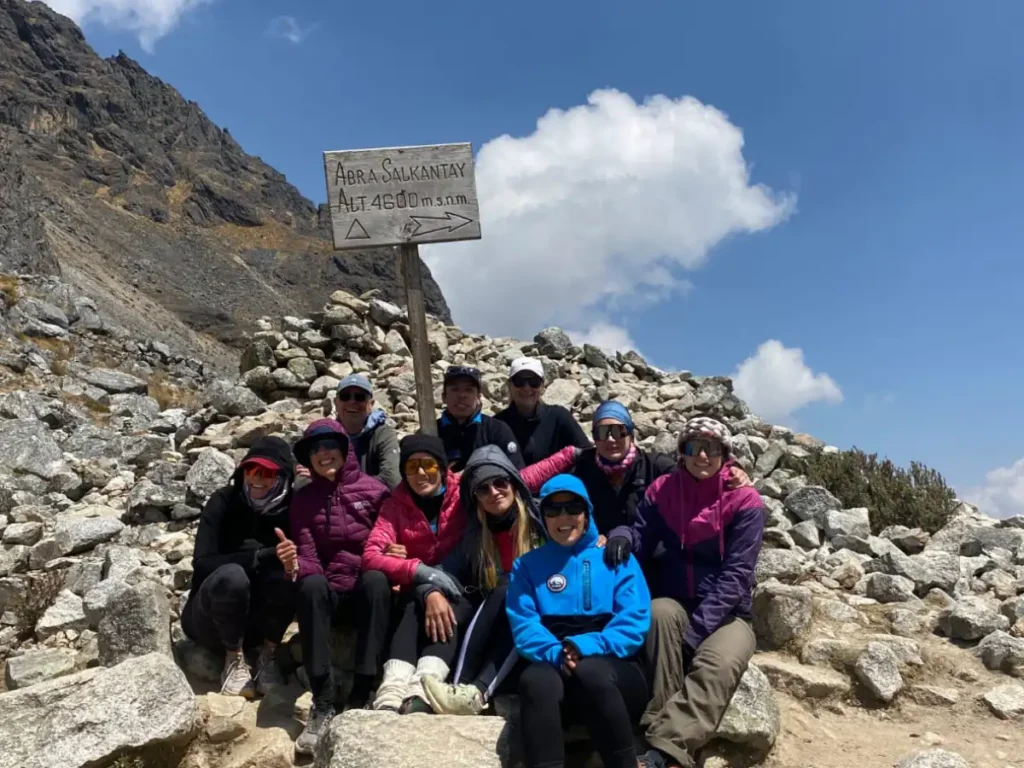
The crux is the Salkantay Pass at 4,630 m, higher than any point on the Inca Trail. You cross it on day two, the longest and coldest day of the whole route: you climb to the pass in the morning, then descend for hours toward the cloud forest. That day tests your stamina as much as your tolerance for cold and altitude.
The good news: the Salkantay has far fewer stone staircases than the Inca Trail, so it’s usually kinder on the knees. Daily distances range from 12 to 22 km, with significant ups and downs. It isn’t technical — you don’t need climbing gear — but it does require solid fitness and, above all, proper acclimatization.
Who is it for? Travelers in good shape who are up for real effort. You don’t need to be an athlete, but you do need to arrive trained and acclimatized. If pass day worries you, keep in mind that support horses carry the heavy gear and you walk at your own pace.
Unsure whether you’re ready for the pass? Send us your fitness level and we’ll tell you honestly which version suits you and how to prepare.
Ask an expert Book the 5-day Salkantay
What to pack for the Salkantay Trek
The heavy gear (tents, food) is carried by horses and muleteers. You carry a daypack. Even so, a few things can’t be missing — especially given the swing between the freezing pass and the warm jungle:
- Layers: it’s very cold up high and warm and humid down low. Technical tees, a good fleece, a waterproof jacket, and gloves for the pass.
- Broken-in hiking boots, plus sandals or light shoes for camp.
- Thermal base layers for sleeping; nights at altitude are frigid.
- Rain gear, essential even in dry season.
- Sun protection: hat, sunglasses and sunscreen — high-altitude sun is fierce.
- Insect repellent for the jungle sections.
- Trekking poles, headlamp, reusable water bottle and lip balm.
- Documents: your original passport — required to enter Machu Picchu.
Remember the Machu Picchu ticket requires a passport and has its own circuit and time-slot rules; it’s worth reviewing before you travel.
Acclimatization and altitude sickness
This matters as much as training, because the Salkantay’s quiet enemy is altitude. Cusco sits at around 3,400 m and the pass tops 4,600 m, so arriving straight from sea level without adjusting is a recipe for a rough time.
The golden rule: get to Cusco 2 to 3 days before you start the trek. That time lets your body adapt to the thinner air. Don’t start hiking the day after you land.
During those days, take it easy: walk slowly, drink plenty of water, eat light, avoid alcohol for the first nights, and try coca tea. A good acclimatization plan includes gentle walks around Cusco and the Sacred Valley.
If you get a headache, mild nausea or fatigue on arrival, it’s usually normal and passes. We cover prevention step by step in our guide to altitude sickness in Cusco.
How much does the Salkantay Trek cost?
The Salkantay cost varies by duration, group size and accommodation level, but here are realistic reference ranges (exact figures change each season, so confirm when you book).
- Classic 5-day Salkantay, agency all-inclusive: typically USD 450–700 per person on a group service, depending on operator and inclusions.
- Premium versions with glass domes or Andean huts: can exceed USD 1,000.
- Private service: pricier than group, ideal for families or closed groups.
Overall, the Salkantay is more affordable than the Inca Trail, largely because it doesn’t depend on the costly permit for the Inca Trail network. Even so, be wary of prices that look too cheap: they usually mean large groups, underpaid muleteers, or low-quality gear.
A 2026 note: the Machu Picchu entry is now billed separately to agencies, which nudged the cost of almost every route slightly higher. It’s a regulatory change, not an operator markup.
In most cases the price already includes transport from Cusco, guide, cook, pack horses, accommodation, meals, the Machu Picchu entry, and the return train or transfer. Always ask for a clear breakdown of what’s in and what’s out.
One clear 2026 trend is accommodation: alongside traditional tents, many operators offer glass sky domes and Andean huts that shield you from the cold better and let you watch the stars from bed.
Salkantay vs Inca Trail
This is the comparison we’re asked for most. Here’s the honest version.
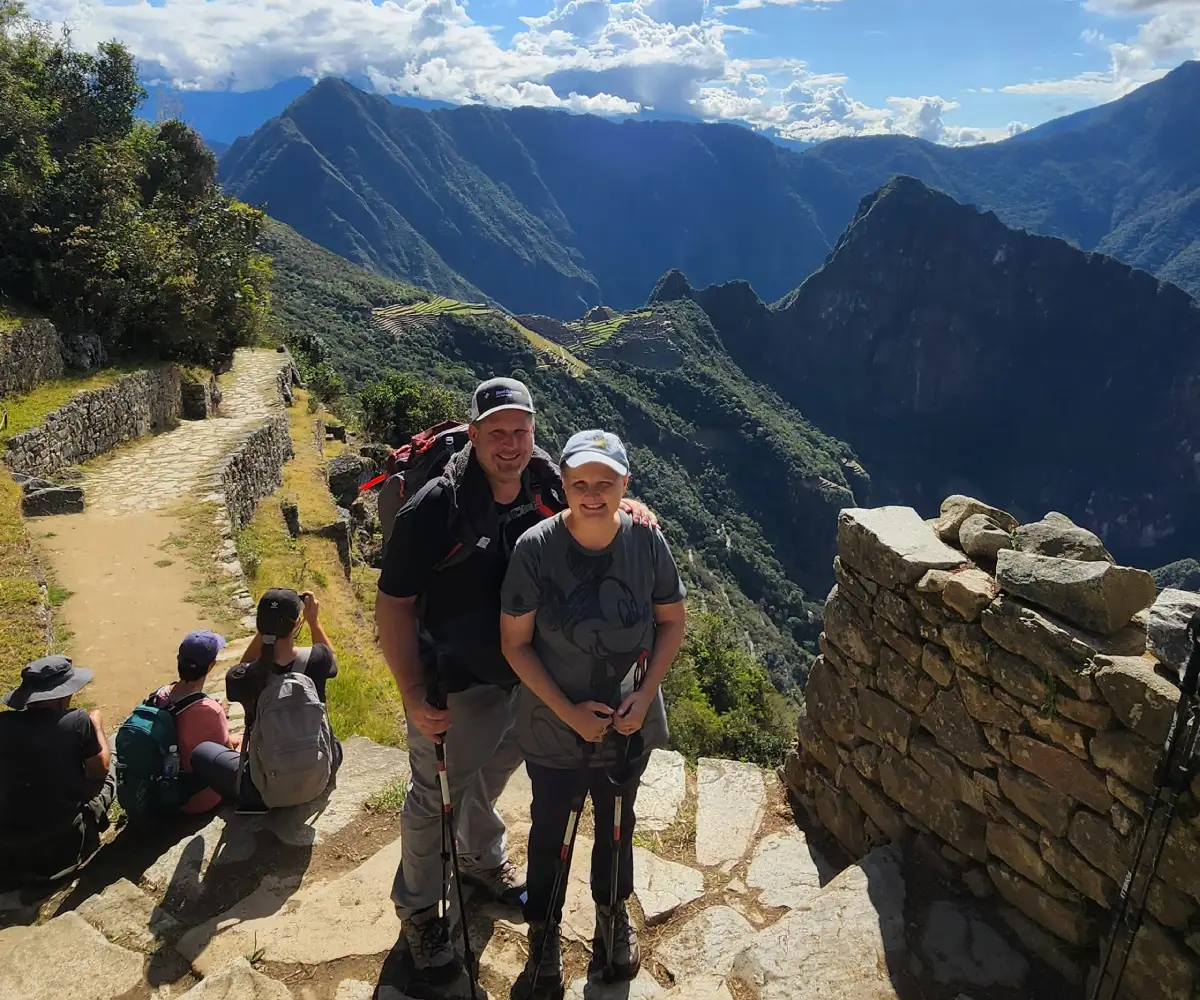
The Inca Trail is more historical: it follows the original Inca stone road, passes hidden ruins, and ends by entering Machu Picchu through the Sun Gate. Its big constraint is the permit, which sells out months ahead and forces you to plan far in advance.
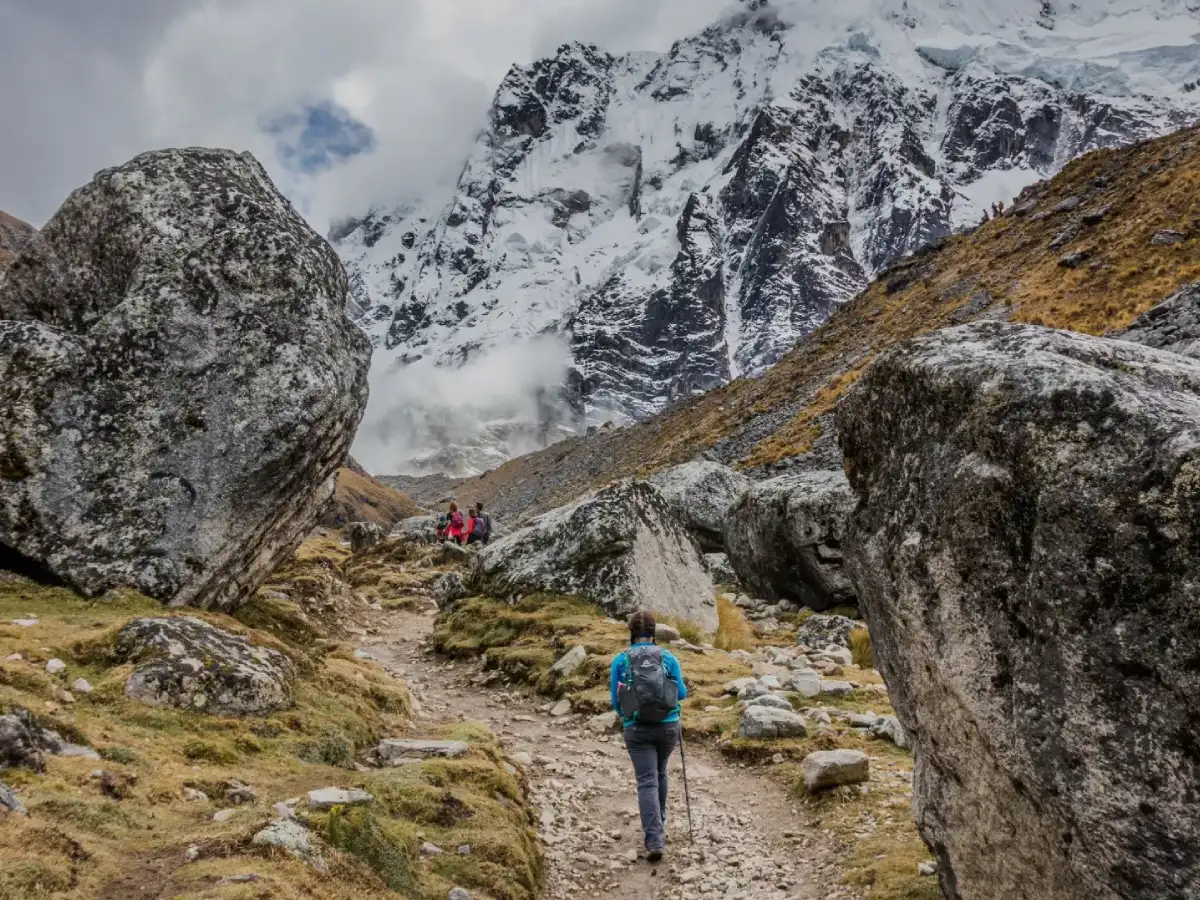
The Salkantay is wilder and more high-mountain: higher, with spectacular glacial landscapes and no permit bottleneck, which gives it enormous flexibility. In return, it doesn’t offer the classic arrival through the Sun Gate or as many ruins along the way.
Which to choose? If you dream of the Inca road and the Sun Gate, and can book ahead, go for the Inca Trail. If you want pure mountains, more date flexibility, or the classic route is sold out, the Salkantay is your trail. And if you don’t want to choose, the 6-day combination gives you both. You can read the complete Inca Trail guide and our Salkantay vs Inca Trail comparison to decide at your own pace.
What’s included with Aura Travel
When you book with us, your Salkantay package covers the essentials so you can focus on hiking and enjoying:
- Transport from Cusco to the trailhead and back from Aguas Calientes.
- An official, bilingual guide who knows the route and its surroundings.
- A mountain cook and full meals throughout the trek.
- Pack horses and muleteers treated with fair working conditions.
- Accommodation in camping or domes/huts depending on the version you choose.
- Machu Picchu entry and a guided tour of the citadel.
- Pre-trek briefing, first-aid kit, emergency oxygen, and round-the-clock support.
- Small groups for a more personal experience.
We offer both group and private departures, and we’ll tailor the trip if you’re traveling with family, as a couple, or want to add the Inca Trail combination.
How to book the Salkantay Trek
Booking the Salkantay is simpler than the Inca Trail, precisely because it doesn’t depend on limited permits. Even so, it helps to follow these steps:
- Choose your route and date. Decide how many days you want to walk and which version suits your time and level.
- Reserve your spot. Confirming locks in your place on the departure and your chosen accommodation, especially in high season.
- Plan your acclimatization. Arrive in Cusco 2 to 3 days early; we’ll help you organize those days.
- Prepare. We send you the packing list and the pre-trek briefing.
- Walk. We handle the logistics; you enjoy the mountains.
Although the Salkantay is flexible, the best departures and accommodations fill up in the busiest months (May to August), so booking ahead always works in your favor.
Start your Salkantay today. Tell us your dates and we’ll make it happen: we reserve your spot, organize your acclimatization, and guide you every step of the way.
Book now See the 5-day Salkantay Trek
Frequently asked questions about the Salkantay Trek
Can I do the Salkantay Trek without an agency?
Yes, the Salkantay can be hiked independently because it isn’t inside a restricted-access zone like the Inca Trail. That said, going with an authorized agency provides a guide, logistics, pack horses, meals and the Machu Picchu entry, which makes the trek safer and more comfortable — especially given the altitude.
Does the Salkantay Trek need permits?
No. Unlike the Inca Trail, the Salkantay doesn’t require the limited permit that sells out months ahead. You only need the Machu Picchu entry for the final day, which your agency arranges. That’s why it can be booked with far more flexibility, with departures all year.
How hard is the Salkantay Trek?
It’s challenging. The highest point is the Salkantay Pass at 4,630 m, higher than any part of the Inca Trail, and day two is long and cold. It isn’t technical, but it requires solid fitness and proper acclimatization. In return, it has fewer stone staircases, making it kinder on the knees.
Does the Salkantay Trek include Humantay Lake?
Yes. Humantay Lake, at around 4,200 m, is visited on the first day of the classic route and is one of its biggest highlights. It also serves as a first acclimatization test before pass day.
What’s the best month for the Salkantay Trek?
The dry season, May to September, offers the best conditions: clear skies and firm trails. The shoulder months (April, May, September and October) combine good weather with fewer people. You can hike it year-round, since the Salkantay doesn’t close in February.
Does the price include the Machu Picchu ticket?
Yes. In a full Salkantay package the Machu Picchu entry is included, along with transport, guide, meals, accommodation and pack horses. From 2026 the entry is billed separately to agencies, which is reflected in the total price.
What’s the accommodation like on the Salkantay Trek?
It depends on the version. Options range from traditional tent camping to glass domes and Andean huts — an increasingly popular 2026 trend that shields you from the cold better and lets you watch the stars from bed.