7 min read
73 vistas
Inca Trail in August
August wraps up the busiest quarter of the year for the Inca Trail, alongside June and July. It’s...
Leer articuloIf you’re researching Salkantay trek difficulty, you’ve probably already heard this route has a reputation for being demanding. And the truth is, it is: it’s not a leisurely stroll suited for anyone with zero preparation. But it’s also not an expedition reserved only for elite athletes. In this article, we want to be honest with you about how hard the Salkantay Trek really is, without exaggerating the risks or downplaying them, so you can make an informed decision and prepare properly.
If you’re not yet familiar with the full route, we recommend checking out our complete Salkantay guide first, where we break down the itinerary day by day.
Generally speaking, the Salkantay Trek is classified as moderate to high difficulty. It’s not a technical trek — it doesn’t require climbing gear or previous mountaineering experience — but it does demand a reasonable level of fitness, a good capacity to acclimatize to altitude, and the mental willingness to walk several hours a day for consecutive days.
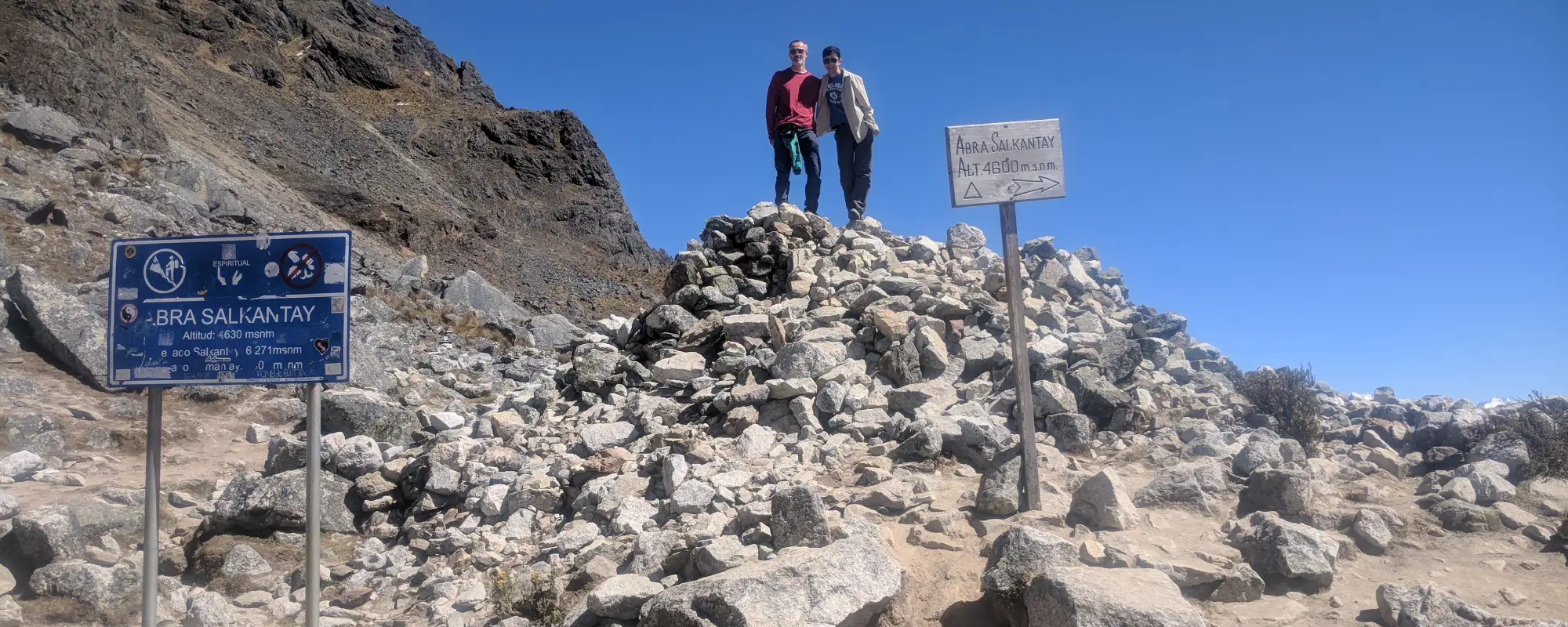
Compared to other routes to Machu Picchu, the Salkantay is generally considered more demanding than the classic Inca Trail, mainly because it reaches a higher maximum altitude at the Salkantay Pass (4,630 m / 15,190 ft) versus the 4,215 m (13,829 ft) of Warmiwañusca, the highest point on the Inca Trail. If you’re torn between the two options, we recommend reading our comparison of Salkantay vs Inca Trail, where we detail the differences in difficulty, scenery, and permit availability.
It’s important to be clear: the difficulty doesn’t come from a single factor, but from the combination of altitude, daily distance, and temperature swings, which we’ll break down in the sections below.
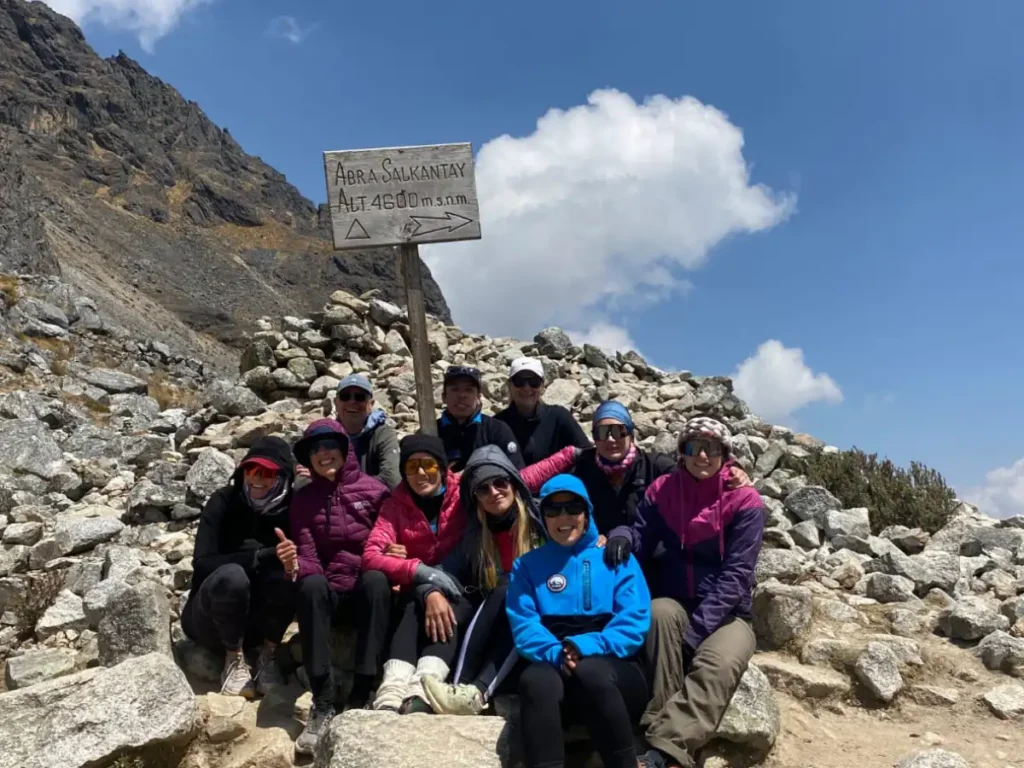
The factor that most influences the real difficulty of the Salkantay is altitude, and specifically, the day you cross the Salkantay Pass, the highest point of the entire route at 4,630 meters (15,190 ft) above sea level.
This is, without a doubt, the hardest day of the trek. At that altitude, the air contains significantly less oxygen than at sea level, which means every step requires more effort than usual — even for people in good physical shape. It’s common to experience heavier breathing, faster-than-normal fatigue, and in some cases mild symptoms of altitude sickness such as headache or nausea.
A few key points about the altitude profile:
If you’ve never been at high altitude before, we recommend checking out our guide on altitude sickness in Cusco, where we explain how to acclimatize properly before taking on any trek in the region.
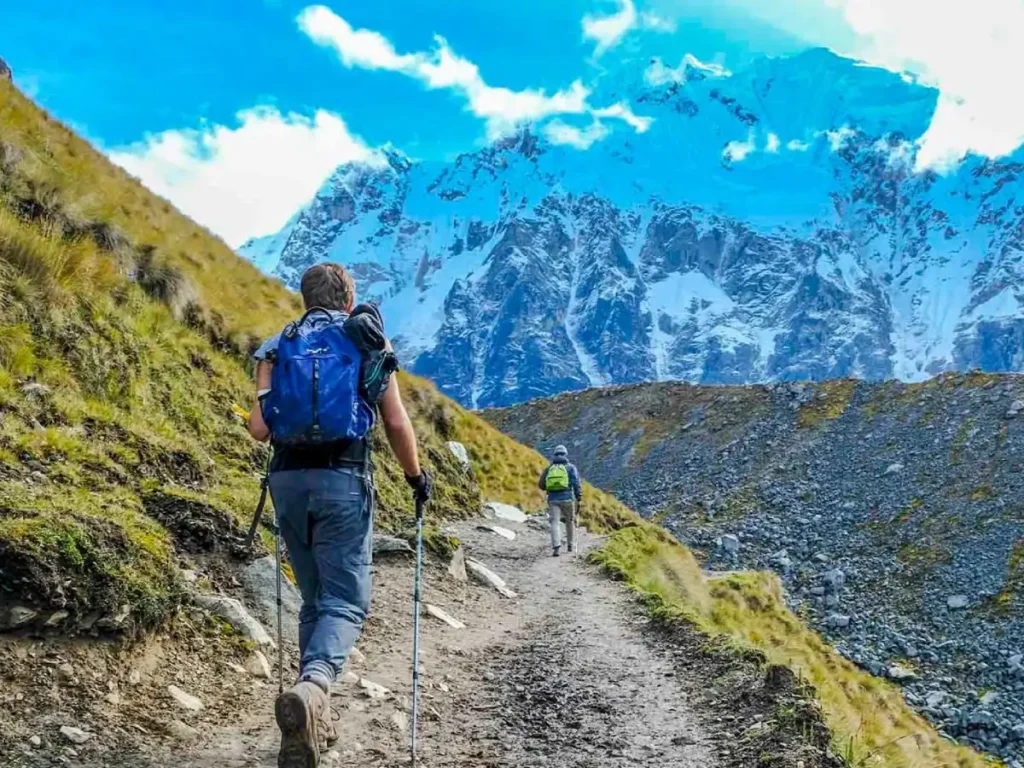
The difficulty of the Salkantay isn’t concentrated only on pass day. It’s a route that demands sustained effort across several days, each with its own challenges.
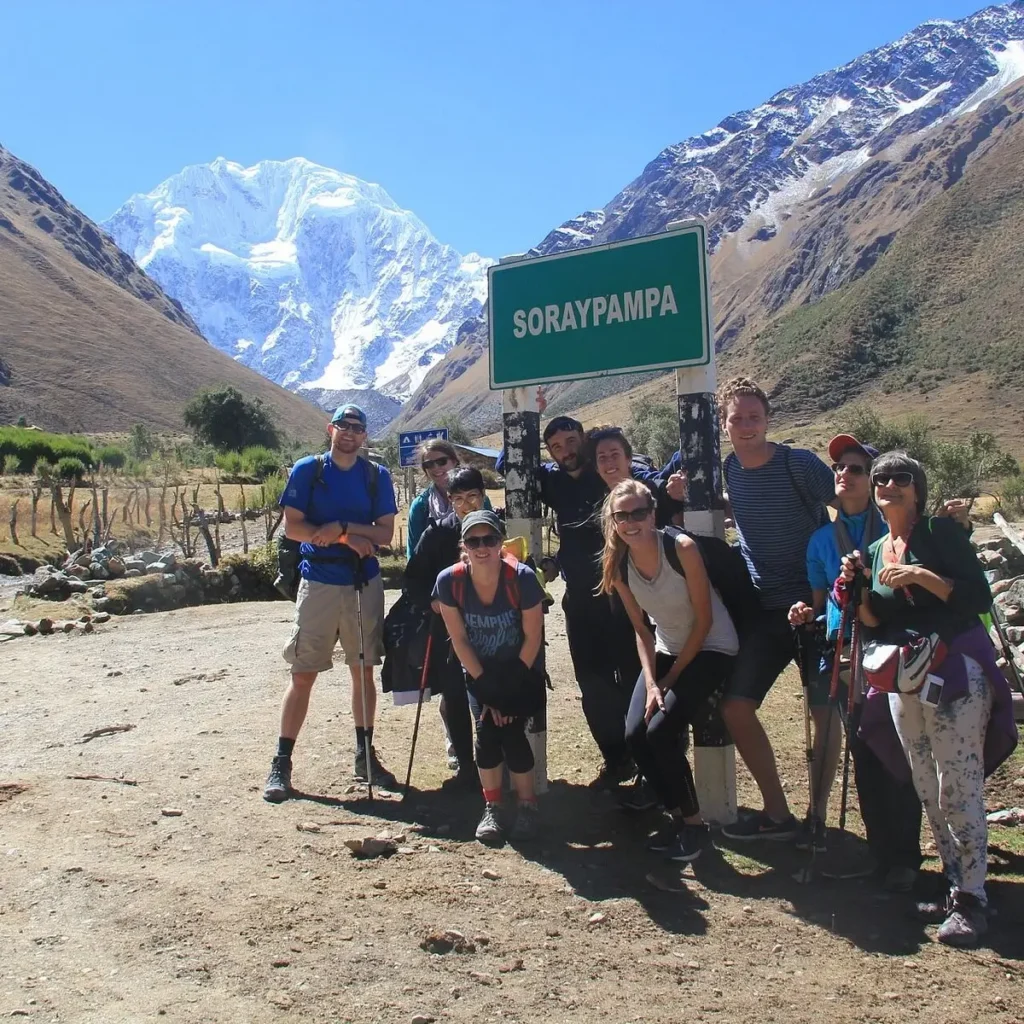
Day 1: Generally a moderate hiking day toward Soraypampa, with plenty of time to acclimatize to the surroundings. It’s a good “warm-up” before the big push the following day.
Day 2 (pass day): The most demanding day of the entire trek. It combines a long climb at extreme altitude with a long descent toward lower elevations. This tends to be the longest day, with several hours of continuous walking.
Day 3: The terrain shifts noticeably: you descend toward high jungle areas, with warmer temperatures and rising humidity. Physical effort decreases, but the climate shift can be tiring for the body.
Day 4-5: Gentler stretches, generally combining walking with transportation or even the option to cover part of the route by bike, depending on the itinerary chosen, before arriving at Machu Picchu.
If you choose the Salkantay Trek 5 days, it’s important to understand that the effort isn’t uniform: some days are notably more intense than others, and mentally planning for this variation will help you manage your energy better throughout the trip.
One of the most common questions is whether the Salkantay is a viable option for beginners. The honest answer is: it depends on your prior preparation, not necessarily on your trekking experience.
The Salkantay may be a good fit for you if:
It may not be the best option if:
It’s true that many people with no prior mountaineering experience complete the Salkantay successfully every year, but the key lies in prior preparation, not in showing up with zero training.
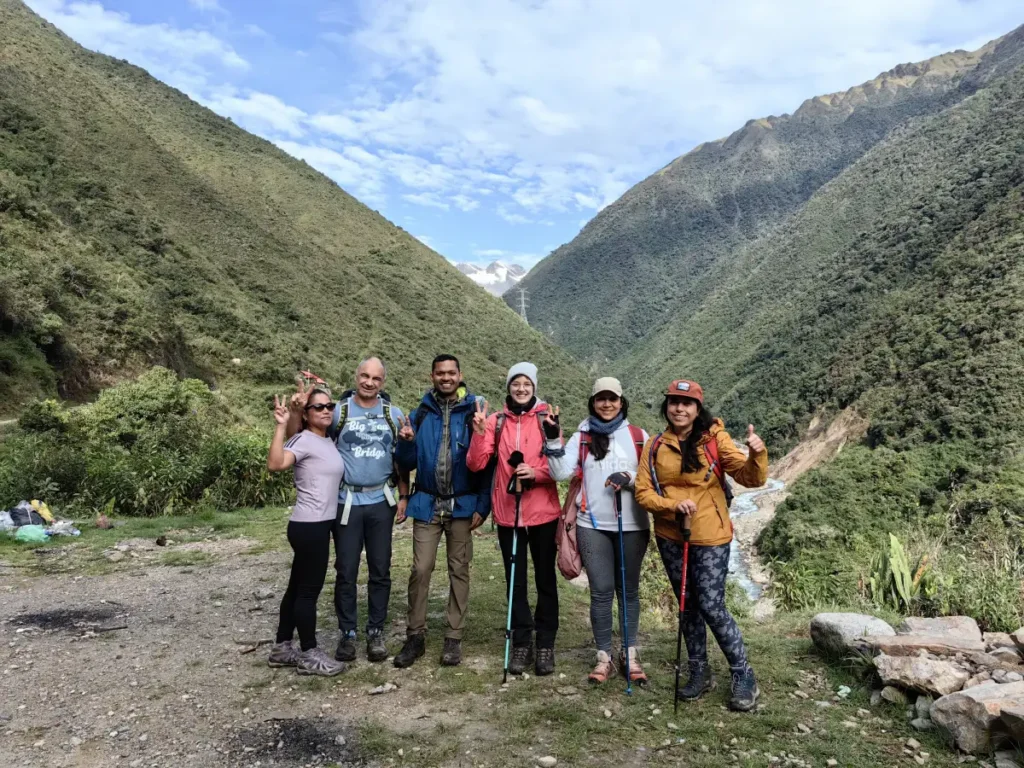
The good news is that Salkantay trek difficulty can be significantly reduced with proper preparation in the weeks leading up to your trip.
Physical preparation:
Acclimatization:
Mindset:
Being honest about Salkantay trek difficulty is the best way to help you prepare properly. Yes, it’s a demanding trek, especially on the day you cross the pass, where altitude and distance combine to test your physical and mental endurance. But it’s also a route that’s accessible to people with no prior mountaineering experience, as long as they dedicate time to physical preparation and respect the acclimatization process.
There’s no magic formula that completely eliminates the effort involved in walking above 4,600 meters, but there are ways to significantly reduce the risk of a rough experience: prior training, proper acclimatization, and a realistic attitude toward the challenge.
Everyone experiences altitude and physical exertion differently, so if you have specific questions about your own situation — fitness level, age, prior experience, or a medical condition — it’s best to talk directly with specialists who know the route in depth.
Not sure if the Salkantay is right for you? Get your questions answered by our team and we’ll help you assess your readiness and choose the best option for your trip.
También te puede interesar
August wraps up the busiest quarter of the year for the Inca Trail, alongside June and July. It’s...
Leer articulo
July is, along with June and August, one of the busiest months of the year for the Inca...
Leer articulo
If you’re planning a trip to Machu Picchu and your dates fall in February, there’s something important you...
Leer articulo
The Salkantay Trek is one of the most rewarding alternatives to the classic Inca Trail, but it’s also...
Leer articulo
If you’re planning the Salkantay trek, chances are you’ve asked yourself whether it’s worth doing it without a...
Leer articulo
Building a solid Peru itinerary is what separates a trip that flows smoothly from one that turns into...
Leer articulo
If this is your first time planning a trip to South America, it’s completely normal to feel a...
Leer articulo
Figuring out your Peru trip cost is one of the most important steps before booking anything. The good...
Leer articulo