

8 min read
35 vistas
Peru in 3 or 4 days: what to see on a short trip
Not everyone has two weeks to spare. Sometimes it is a long weekend, a few vacation days or...
Leer articuloChoquequirao is a vast Inca citadel hidden on a mountainside above the Apurímac canyon, and you can only reach it on foot. There is no road, no train and, for now, no cable car. That is why it is still nearly empty compared with the crowds at Machu Picchu.
This guide explains what Choquequirao is, what the Choquequirao trek looks like, how many days you need, how hard the hike really is and what is known today about the planned cable car. We will be honest with you: this is a demanding walk.
Choquequirao is an Inca archaeological complex in the Santa Teresa district, La Convención province, Cusco region, within the Vilcabamba mountain range. It sits at roughly 3,000 meters above sea level (sources give between 3,050 and 3,100 m), looking out over the Apurímac canyon, where the river runs at about 1,500 meters.
The Inca built it in the 15th and 16th centuries, and it was abandoned toward the end of the 16th century. Its agricultural terraces, plazas, temples and channels spread across the slope. Only an estimated 30% to 40% of the complex has been excavated, so it is still being uncovered.
The site has been known for centuries. A Spanish memorial from 1710 is among the earliest mentions, and Hiram Bingham visited in 1909, before his arrival at Machu Picchu. Today you visit it on a multi-day hike that starts at Capuliyoc.

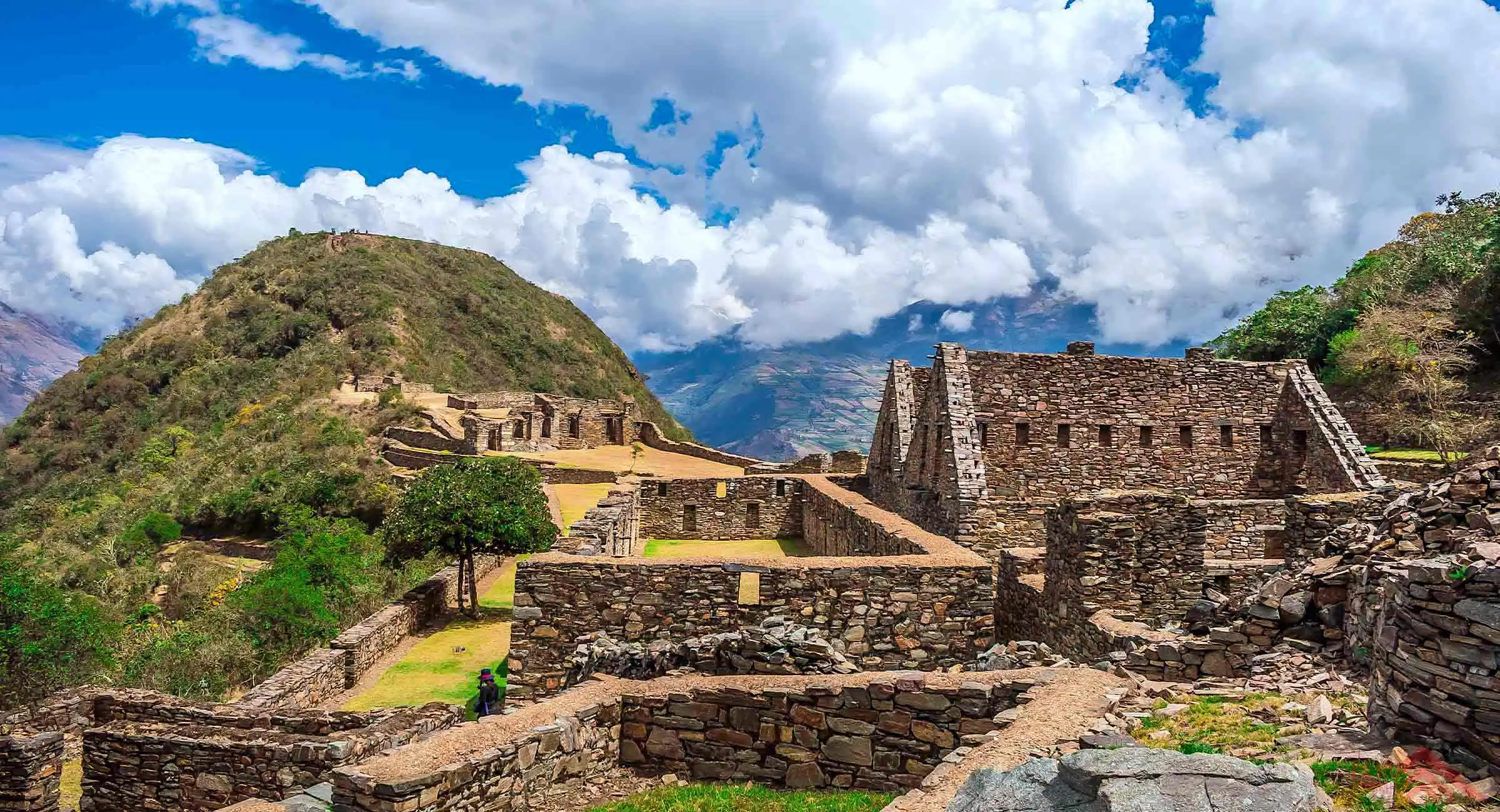
Choquequirao is often called Machu Picchu’s “sister city” because of its similar architecture and its setting high in the mountains. Like Machu Picchu, it has terraces and spectacular views. But the experience is very different.
First, access. Machu Picchu has a train and a bus. Choquequirao requires walking, so visitors often spend a whole day almost alone with the ruins. Second, traffic: according to figures cited for 2013, a little over 5,000 people trekked there in a year, a fraction of what Machu Picchu receives. That number is old, but the gap is still huge.
If you are not sure which trek to choose, see our comparison of Salkantay, Lares or Inca Trail. And if you want Machu Picchu itself, we have a complete Inca Trail guide.
Choquequirao: how many days? The usual answer is 4 days, with 5-day versions that are slower or include a full day at the ruins. It is an out-and-back hike on the same trail.
How to get to Choquequirao. From Cusco you leave before dawn, around 4:00 or 4:30 a.m., by vehicle to Cachora (about 2,800 m), a drive of roughly 4 to 5 hours. From Cachora you reach Capuliyoc, where the trail begins.
Here is a typical 4-day outline, with approximate distances and times from one operator’s published itinerary:
| Day | Route | Distance | Walking |
|---|---|---|---|
| 1 | Capuliyoc to Santa Rosa (via Chikiska) | 11 km | 6 h |
| 2 | Santa Rosa to Marampata and Choquequirao | 16 km | 8 h |
| 3 | Marampata to Chikiska | 15 km | 6 h |
| 4 | Chikiska to Capuliyoc, then back to Cusco | 12 km | 4 h |
That adds up to about 54 km and around 24 hours of walking. Times vary with your group’s pace and the operator’s itinerary. A 5-day version gives a full day at the archaeological site, so you can explore its terraces without rushing.
If you want another long hike in the region, see the complete Salkantay guide.
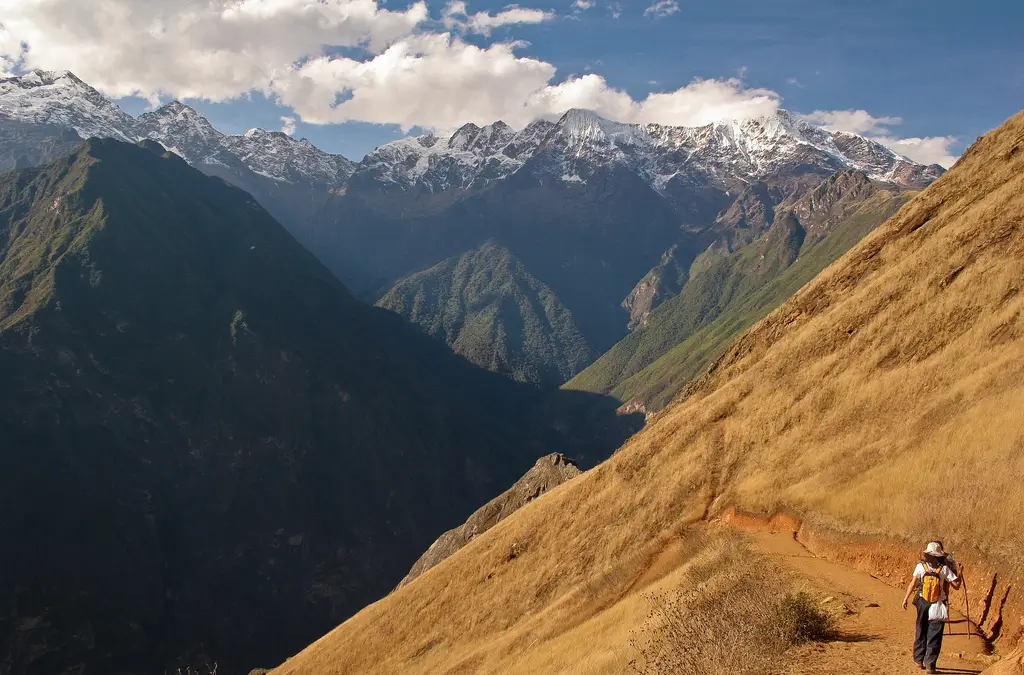
Let’s be clear about Choquequirao difficulty: this is a demanding trek. Some operators rate it “intermediate”, but that does not make it easy. The challenge is not extreme altitude but elevation change. You descend from Capuliyoc (around 2,900 m) into the Apurímac canyon, to roughly 1,900 to 2,200 m depending on the point, then climb back up to Marampata and the site, near 3,000 m. You repeat all of it on the way back.
In practice, this means:
The maximum altitude is moderate compared with other treks in the region, but you should arrive acclimatized. Spend at least a couple of days in Cusco first and read our guide to altitude sickness in Cusco. If you have knee, heart or breathing problems, check with your doctor.
Our honest advice: do this hike only if you are used to walking several days in a row. If you are unsure, start with a shorter route.
The dry season, April to October, is the most stable. May through September is the most predictable period. In the rainy season, November to March, rainfall increases, trails become slippery on the canyon descents and the river can rise.
April and October offer a good balance with fewer trekkers, although October can bring more cloud and early rain. In the dry season, nights at the site can approach freezing, while the canyon feels hot during the day.
If you travel between November and March, confirm trail conditions with your operator before you leave.

A basic list for a 4-day Choquequirao hike:
Most operators include tents, meals and muleteers who carry the main luggage. Ask what is included and carry only what you need for the day.
A cable car is planned for Choquequirao that would cut the two-day approach to a few minutes. But according to information published in late October 2026, it has not been built: it is still in the bidding process with no concessionaire, the award is now expected in the first quarter of 2027, and there is no construction or opening date. Local media have mentioned construction in 2027 and operation in 2028, but those are estimates that may change.
There is no date yet, but a cable car would inevitably change the experience: more visitors, more services and less silence. That is why many travelers choose to go now, while getting there is still a hike.
It is a good time to start planning, but keep in mind that the dates are not confirmed. In the meantime, you can combine the trek with a few days of acclimatization in Cusco. Everything you need is in our Cusco travel guide.
The Choquequirao hike is done with an operator that arranges transport, guide, tents, meals and muleteers. Book ahead, especially from May to September, when demand is highest.
Before booking, ask about:
If you would like us to tailor the trek to you, ask about the Choquequirao trek and we will guide you based on your fitness, your dates and the time you have in Cusco.
También te puede interesar
Not everyone has two weeks to spare. Sometimes it is a long weekend, a few vacation days or...
Leer articulo
Aguas Calientes, also called Machu Picchu Town or Machu Picchu Pueblo, is the small town at the foot...
Leer articulo
The Inca Jungle Trail is the most active way to reach Machu Picchu: you coast downhill by bike...
Leer articulo
Going from Lima to Cusco overland is far more than a long transfer. You cross the coastal desert,...
Leer articulo
This is probably one of the most common questions among those starting to plan their trip to Peru:...
Leer articulo