

6 min read
110 vistas
Southern Peru route: from Lima to Cusco overland
Going from Lima to Cusco overland is far more than a long transfer. You cross the coastal desert,...
Leer articuloParacas is the gateway to one of the most accessible wildlife shows in Peru. In a single morning boat ride you can see sea lions, penguins and thousands of seabirds around the Ballestas Islands, and in the afternoon explore a desert that drops straight into the Pacific.
This guide covers what to do in Paracas, how the Ballestas Islands tour works, what the Candelabra is, what the Paracas reserve offers, how to get there from Lima or Ica and how long to allow.
Paracas is a small fishing town on the coast of the Ica region, set on a calm bay. Its attractions fall into three groups:
The town’s seafront promenade, with its fish and seafood restaurants, rounds out the plan. If you are wondering what to do in Paracas beyond wildlife, the classic combination is a boat trip in the morning and the reserve in the afternoon.
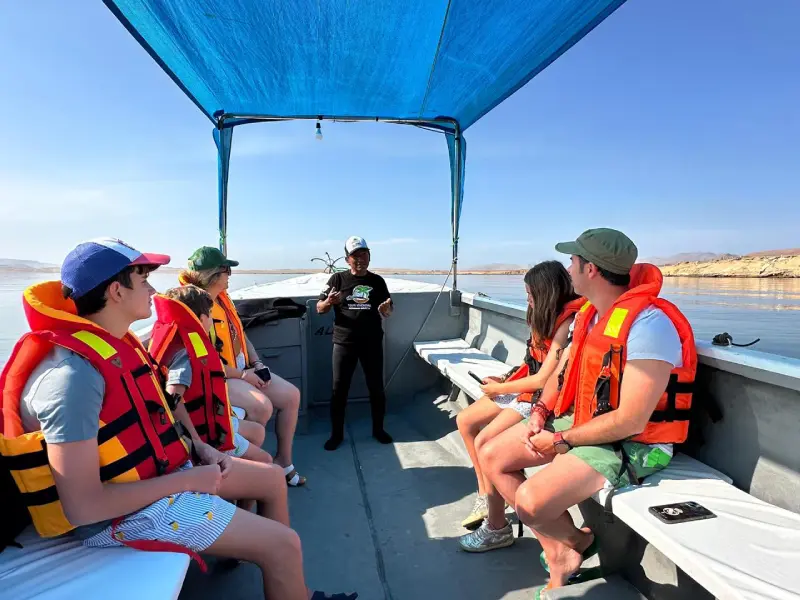
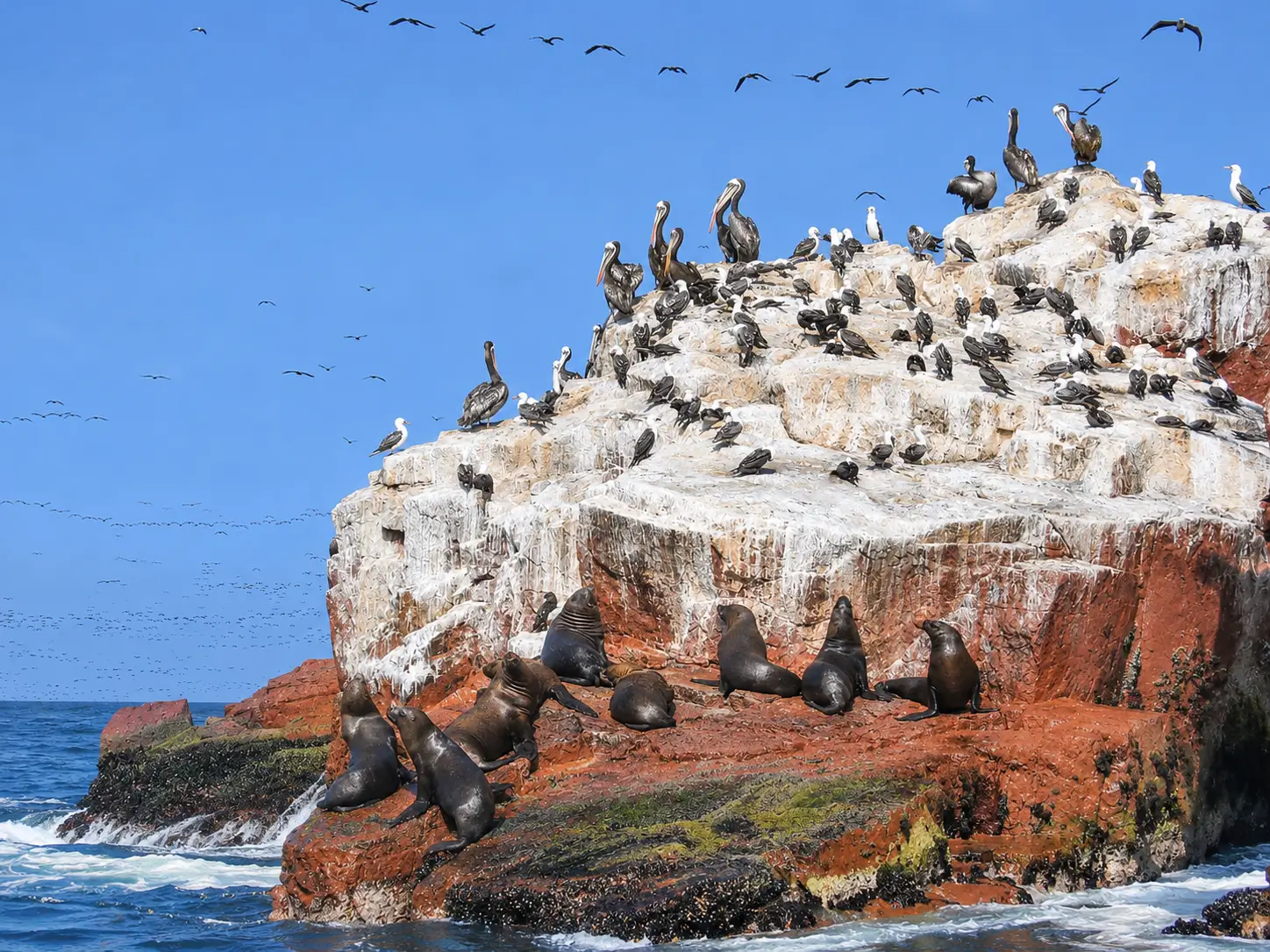
The Ballestas Islands are a group of rocky islets about 20 minutes by boat from the coast. They work as a wildlife sanctuary, so landing is not allowed: the Ballestas Islands tour is always done from the water, close to the rocks.
What you are most likely to see:
The islands are covered in guano, the seabird droppings that were used as fertilizer for centuries. You will also see arches and caves carved by the sea.
Bring a hat, sunscreen and a windbreaker. It is cooler on the water than it looks, and the smell of the colony is strong. Binoculars help, and keep your camera away from spray.
The Candelabra of Paracas is a geoglyph roughly 150 to 180 meters tall, depending on the source, drawn on a sandy slope facing Pisco Bay. It is clearly visible from the sea and is the first stop on the island tour.
Its origin and meaning are still debated. It is usually linked to the Paracas culture and to an age of around two thousand years, but there is no single explanation. Some theories see it as a signal for sailors, others as a ritual symbol. What does surprise visitors is how well it has survived: the dry climate and sandy soil keep it visible.
If you are interested in geoglyphs, it is a good warm-up for the Nazca Lines, further south, which are best seen on a flight.
The Paracas National Reserve was created in 1975 to protect an ecosystem where desert meets sea. It is one of the most important protected marine areas in the country and covers a large area, mostly ocean. The Paracas reserve has a separate entrance fee, and you should bring water, a hat and sunscreen because there is almost no shade.
The most common stops are:
You can visit on a group tour, with a private driver or in your own vehicle. Half-day tours are the most practical.
From Lima. Paracas is about 250 km south, roughly 3.5 to 4 hours along the Pan-American Highway South. Several companies run direct buses, and private transfers are available. Many travelers leave early and do the island tour the same day, although it is more comfortable to stay at least one night.
From Ica. It is around 70 km, about 1 to 1.5 hours by road. If you are still planning that leg, see our guide on how to get to Ica from Lima, which also helps you plan the route in.
The island tour departs from the El Chaco pier in the town of Paracas. Book ahead in high season and arrive early for the pier formalities.


With one full day you can see the essentials: the islands in the morning (about 2 hours of tour, plus pier formalities) and the reserve in the afternoon (3 to 4 hours). With two days you can enjoy it without rushing, with a sunset over the bay and time for the museum.
If you are coming from Lima, the most balanced option is to sleep one night in Paracas and continue the next day to Ica and Huacachina, which is very close and fits neatly into the same stretch of your trip.
The islands can be visited all year, and there is always wildlife to see. A few details can help you choose:
Leave some slack in your schedule in case a tour is rescheduled.
Paracas fits naturally at the start of the southern Peru route, before Ica, Nazca, Arequipa and Cusco. If you would like us to handle transfers, bookings and schedules, add Paracas to your trip with us. See all the options in our Peru packages.
También te puede interesar
Going from Lima to Cusco overland is far more than a long transfer. You cross the coastal desert,...
Leer articulo
The Nazca Lines are one of Peru’s great mysteries: hundreds of giant drawings etched into the desert floor...
Leer articulo
For a first trip to Peru, seven days can cover Cusco, the Sacred Valley, and Machu Picchu. Nine...
Leer articulo
Knowing the best time to visit Ica will help you enjoy the desert, the Huacachina oasis, dune buggy...
Leer articulo
Knowing what to do in Huacachina will help you make the most of one of the most unique...
Leer articulo
Hello, bloggers. Traveling from Lima to Ica is one of the most popular routes for visitors exploring the...
Leer articulo
Traveling to Ica is not just about reaching a destination. It’s about stepping into a completely different rhythm....
Leer articulo