8 min read
5 vistas
Salkantay Trek in June: Clear Skies & Booking
June, along with July and August, is one of the three core months of the dry season in...
Leer articuloJuly is, without a doubt, one of the busiest months of the year to hike the Salkantay Trek, and also one of the best in terms of weather. The combination of summer vacations in the Northern Hemisphere, Peru’s Fiestas Patrias (Independence Day, July 28-29), and the height of the dry season makes July the busiest tourist month of the entire year in Cusco. If you’re planning to walk to Machu Picchu via this alternative to the Inca Trail, July will reward you with clear skies and spectacular scenery, but also busier trails and a real need to plan well ahead.
In this guide, we’ll give you an honest look at what to expect from the weather, the trail, and the logistics if you decide to do the Salkantay in July, so you know exactly what you’re getting into and can enjoy the experience without last-minute surprises.
July sits at the absolute heart of the dry season, and is statistically one of the months with the lowest chance of rain all year in the Salkantay region. During the day, in the lower sections and around the town of Mollepata, temperatures usually range between 18-21°C (64-70°F), with very intense sun due to the altitude and minimal cloud cover, making UV radiation particularly strong at midday.
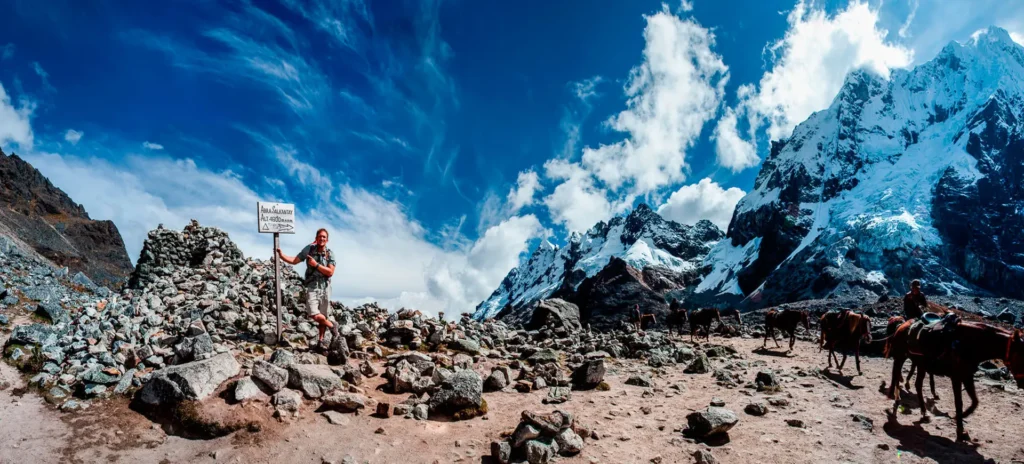
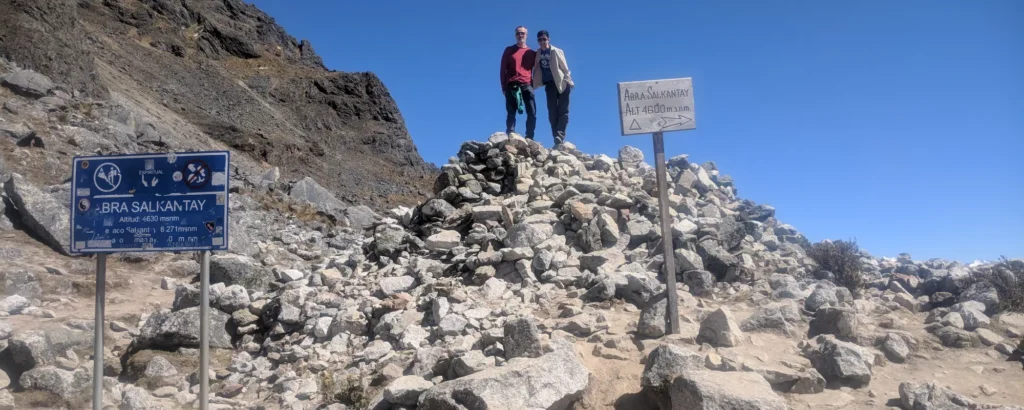
As with June, the big contrast comes in the higher sections. At Salkantay Pass, at 4,630 m (15,190 ft), daytime temperatures rarely exceed 8-10°C (46-50°F), and nights are extremely cold: at the higher camps it’s common to see readings between -10°C and -15°C (14°F to 5°F), sometimes even lower on the clearest nights, since the near-total absence of clouds lets the day’s heat dissipate quickly once the sun goes down.
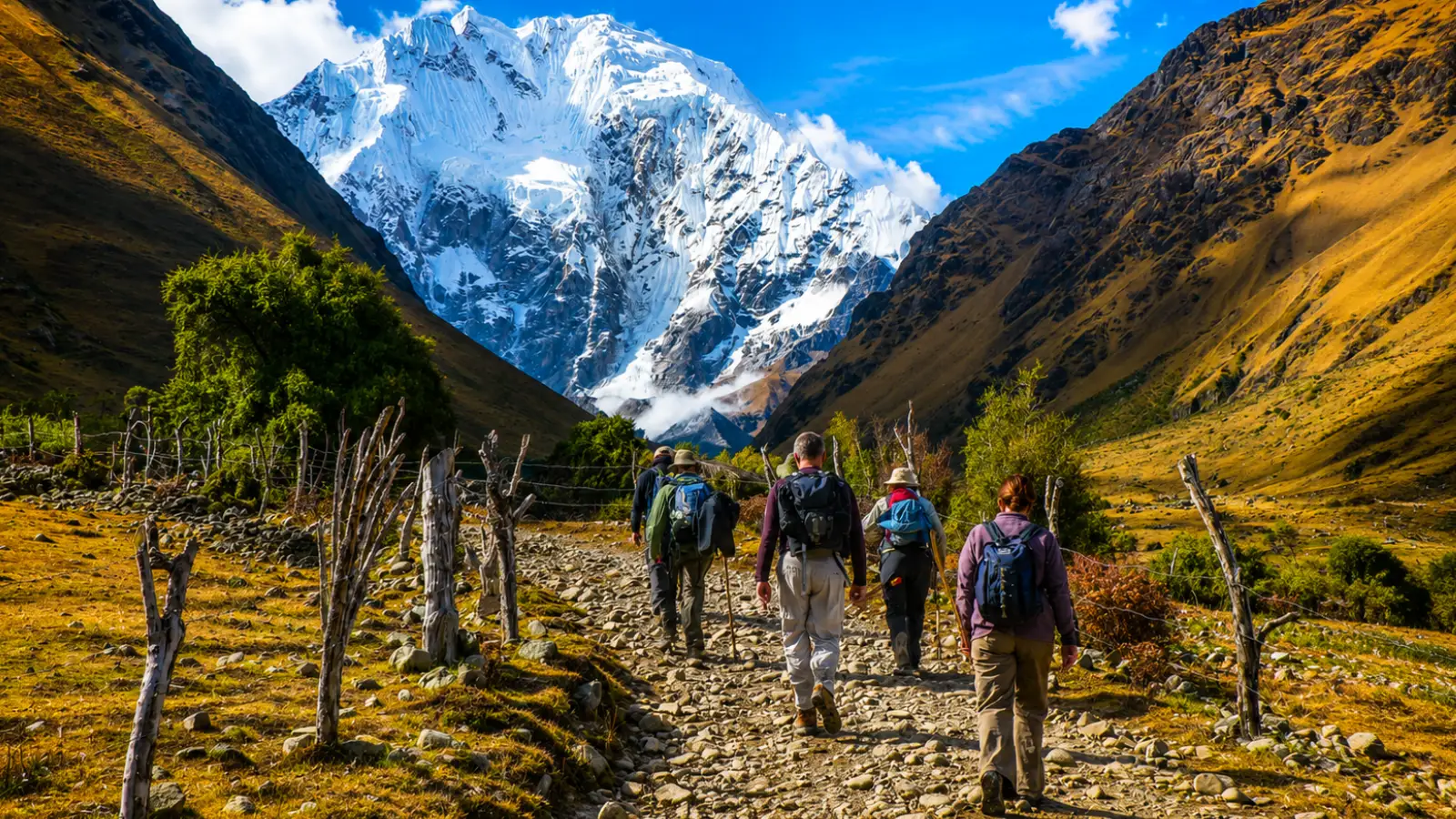
The upside of this dry, cold weather is visibility: July offers, along with June and August, some of the best conditions of the year for seeing Salkantay Mountain (6,271 m / 20,574 ft) completely clear, along with crisp panoramic views of the entire range. It’s, without exaggeration, one of the best months for mountain photography on this route.
Given the sharp temperature contrast between day and night, and the extra physical demand of hiking among larger numbers of people on the higher stretches, prior acclimatization is essential. We recommend checking our Salkantay acclimatization guide before setting out, especially if you’re arriving directly in Cusco (3,400 m / 11,152 ft) from lower elevations.
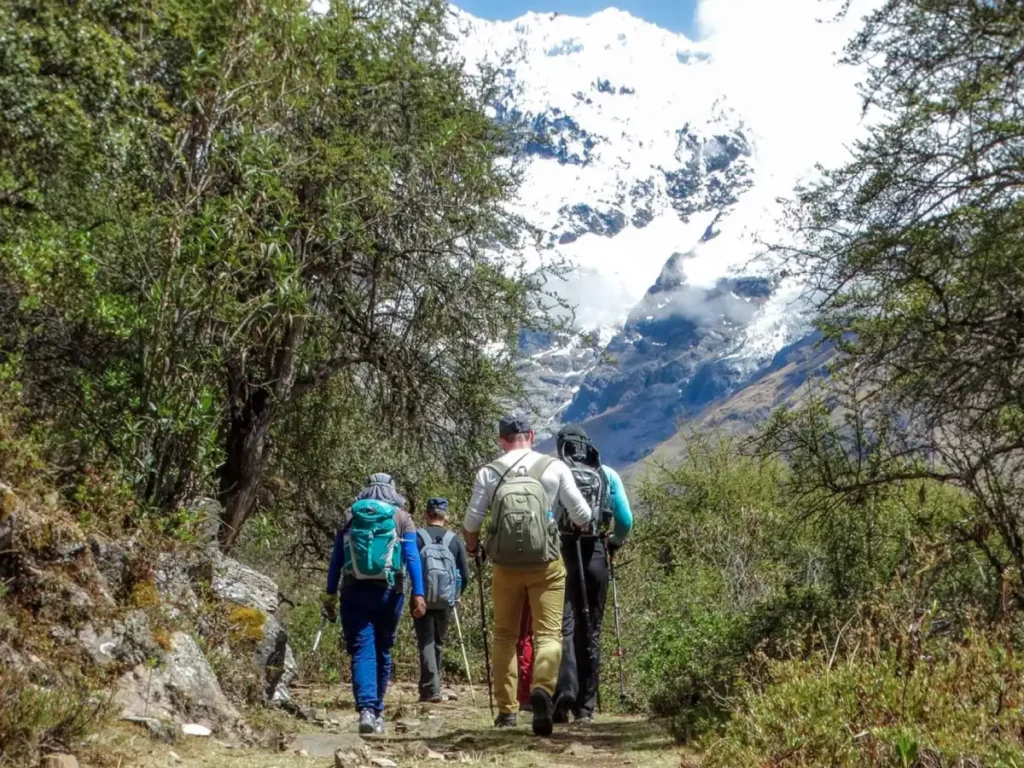
The trail in July is in excellent physical condition: completely dry, firm, and free of the mud issues that can crop up in transition months. The main challenge isn’t the state of the path, but the number of people hiking it at the same time — something we cover in more detail in the crowds section below.
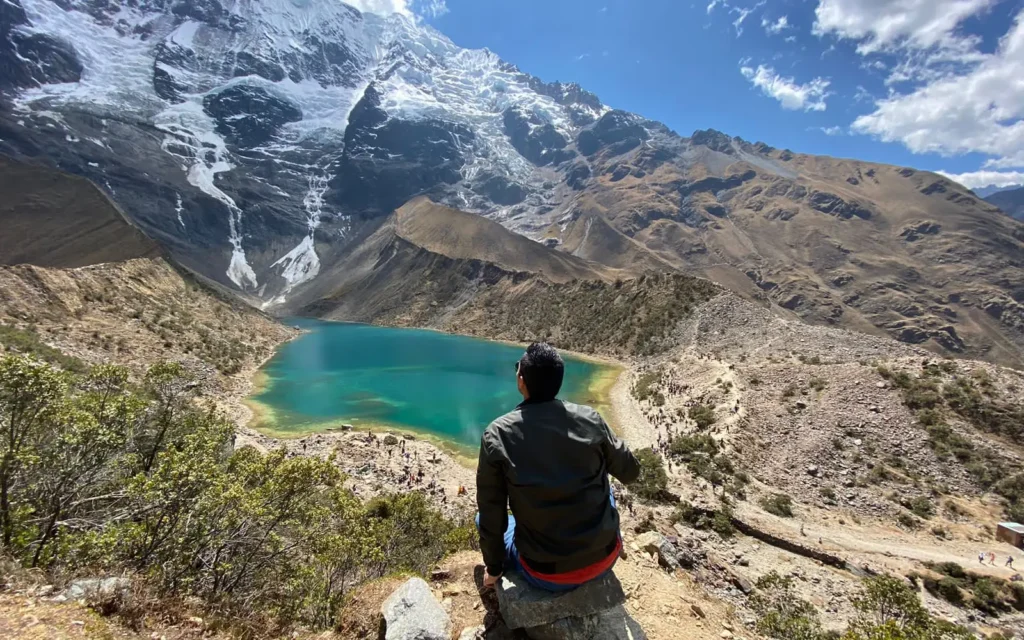
Humantay Lake, at 4,200 m (13,780 ft), looks spectacular in July thanks to the combination of clear skies and turquoise waters contrasting against the glacier in the background. It’s one of the most-photographed months of the year at this point on the route, though also one of the busiest, so if you’re doing the day trip from Cusco, we recommend heading out early to beat the larger group traffic that tends to build up mid-morning.
As for the overall scenery, July continues the trend that starts in June: the greenery of the rainy season has almost entirely given way to drier, more golden tones in the valleys. The landscape remains striking, but visually more arid than in the March-to-May months.
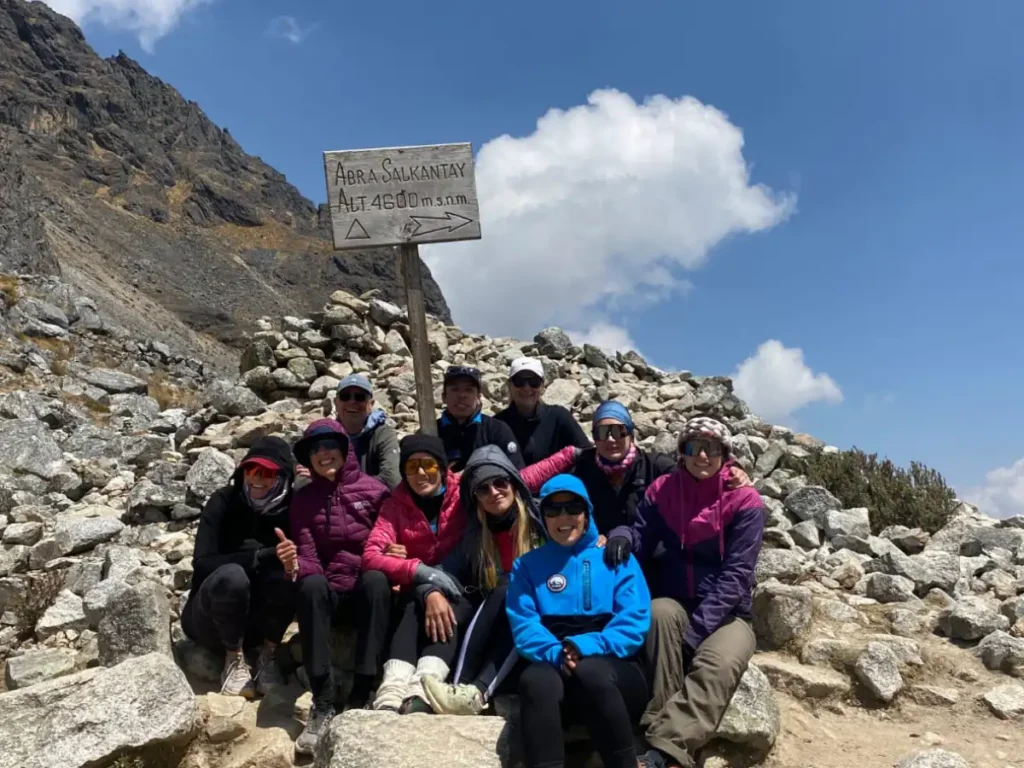
At Salkantay Pass, the odds of a completely clear view of the mountain are among the highest of the year, similar to June and August. Wind at the top can be intense, and combined with the low temperatures, makes this one of the most physically demanding sections of the trek, though the visual payoff is usually extraordinary.
July has a demanding side worth knowing before you book:
Here we get to the most important point for July: it is, along with August, the busiest month of the entire year for the Salkantay Trek. Unlike the classic Inca Trail, which has a fixed daily quota of 500 people (including staff) regulated by the Peruvian government, the Salkantay does not require government-issued permits, which in theory gives it greater booking flexibility.
However, that same lack of an official cap means demand on tour operators, the best-located campsites, and the most experienced guides runs extremely high in July. Summer vacations in North America and Europe, combined with Peru’s Fiestas Patrias, create a mix of international and domestic tourism that quickly fills the best group spots, especially smaller ones that offer a more personalized experience.
If you’re planning to do the Salkantay in July, we recommend booking at least 8 to 10 weeks in advance, especially if your trip coincides with the last week of the month due to Fiestas Patrias. Booking that far ahead not only secures your spot, it also gives you access to better rates before demand drives prices up. You can check all the logistical details in our complete Salkantay Trek guide, and if you’re still unsure whether July is the best option for you, check out our comparison of the best time for the Salkantay Trek.
July’s weather — intensely sunny days, extremely cold nights — calls for well-thought-out gear, with no room for improvising:
Yes, absolutely: July offers some of the best weather conditions of the year for hiking the Salkantay Trek, with nearly guaranteed clear skies and spectacular views of the mountain and Humantay Lake. If your priority is good weather and you don’t mind sharing the trail with more travelers, July is an excellent choice.
That said, go in with realistic expectations: it’s one of the busiest months of the year, both on the trek and in Cusco overall, which means more people at photo spots, higher demand for accommodations, and higher prices if you book late. The gear for the extreme cold at the pass at night isn’t negotiable either. If you book far enough in advance and prepare well, July can give you one of the best possible versions of the Salkantay in terms of weather, though not the quietest in terms of crowds.
Ready to experience it for yourself? Book your Salkantay trek in July with our 5-day Salkantay Trek to Machu Picchu, or if you have questions about dates, cold-weather gear, or spot availability, contact us and we’ll help you plan the perfect trek for you.
También te puede interesar
June, along with July and August, is one of the three core months of the dry season in...
Leer articulo
For many experienced guides and travelers, May is the sweet spot for hiking the Salkantay Trek. That’s no...
Leer articulo
January sits right in the heart of the rainy season in the Peruvian Andes, making it one of...
Leer articulo
September marks the tail end of the dry season on the Inca Trail, and for many travelers it’s...
Leer articulo
Una de las primeras preguntas que surge al planificar un viaje a este país es, precisamente, cuántos días...
Leer articulo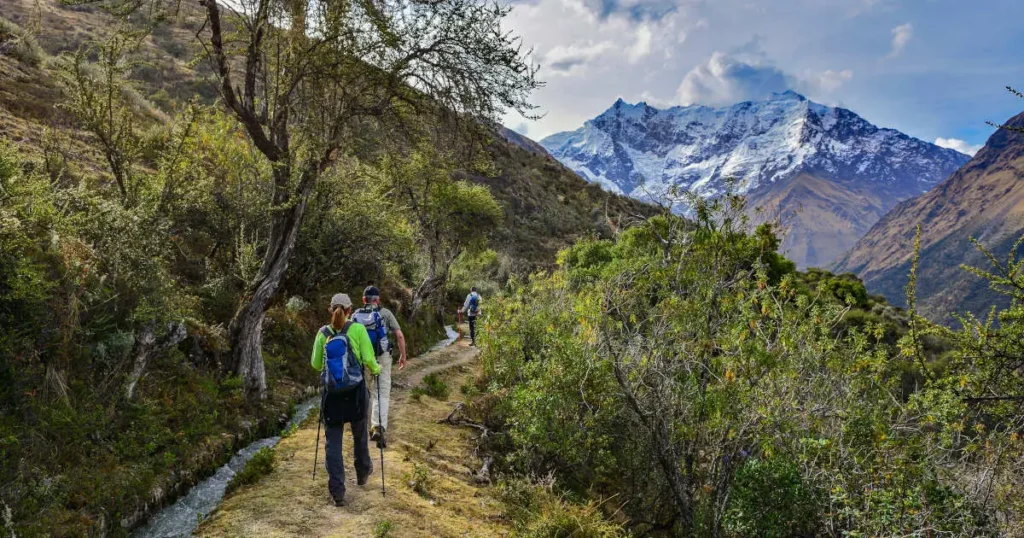
Choosing the best time for the Salkantay Trek is one of the most important decisions before setting out...
Leer articulo
Knowing how to get to Machu Picchu from Cusco is one of the most important steps when planning...
Leer articulo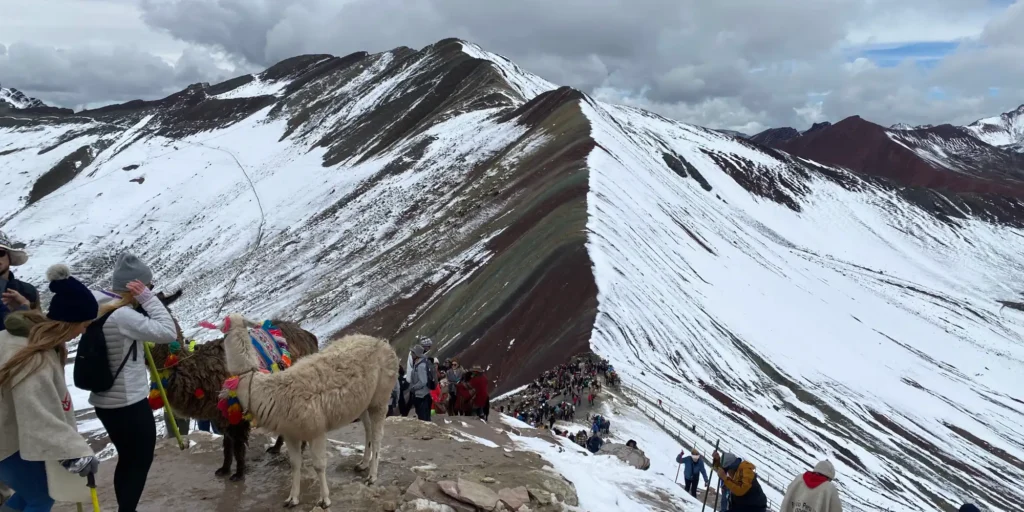
Hello, bloggers. Visiting Rainbow Mountain from Cusco is one of the most popular day trips for travelers arriving...
Leer articulo