
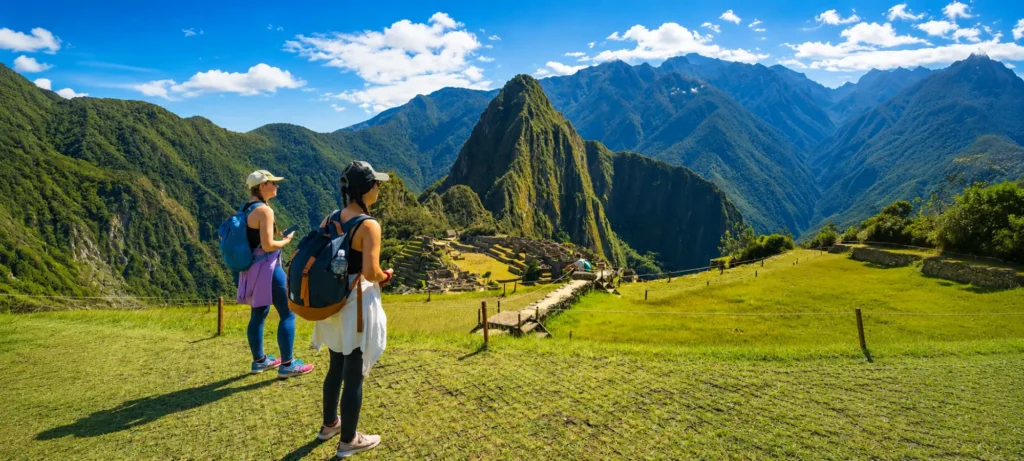
7 min read
73 vistas
Inca Trail in August
August wraps up the busiest quarter of the year for the Inca Trail, alongside June and July. It’s...
Leer articuloIt’s one of the first questions every traveler asks when planning a visit to the ancient citadel: Inca Trail vs train? There’s no single right answer, because it all depends on your fitness level, how much time you have, and the kind of experience you want out of your trip to Peru.
Both routes take you to the same destination, but how you get there — literally and emotionally — is completely different. In this article, we break down the key differences so you can decide, with real information, what the best way to get to Machu Picchu is for your travel style.
Whether you hike or take the train to Machu Picchu isn’t just a transportation choice — it’s an entirely different kind of experience.
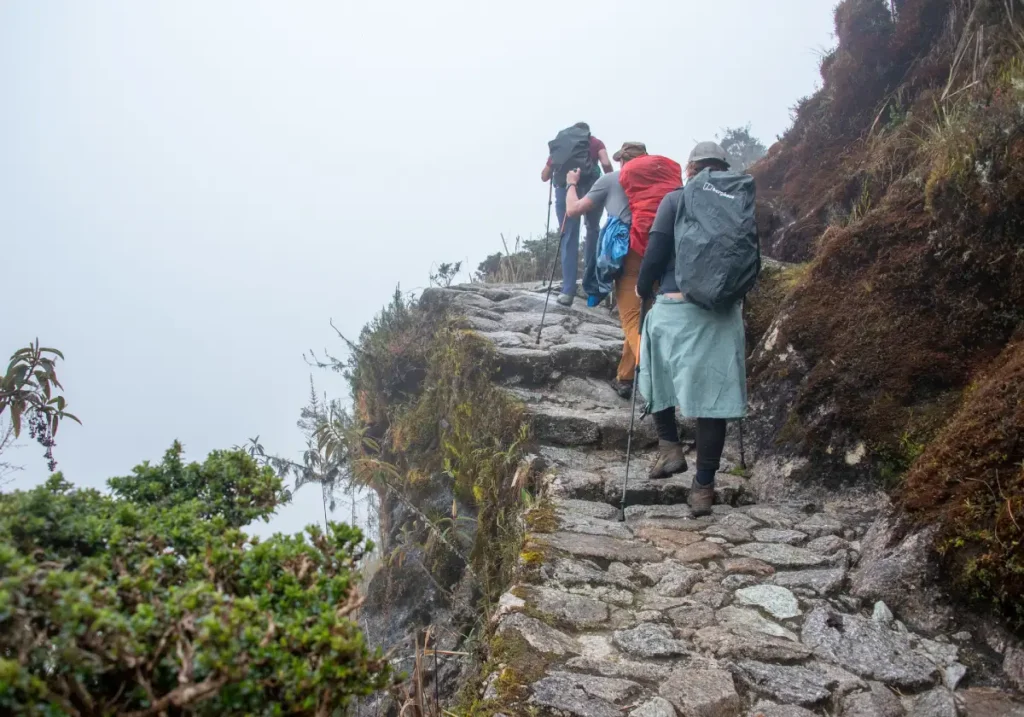
The Inca Trail is a multi-day trek that follows stone paths and staircases built by the Incas themselves more than 500 years ago. Along the way, you pass through cloud forest, mountain passes above 13,000 feet (4,000 m), and several archaeological sites only reachable on foot, such as Sayacmarca, Phuyupatamarca, and Wiñay Wayna.
The real difference is the arrival: after days of effort, you enter Machu Picchu through the Sun Gate (Inti Punku) at sunrise, watching the citadel slowly emerge through the mist. Many travelers describe it as one of the most emotional moments of their lives. If you want to know every detail of the route, stages, and permits, check out our complete Inca Trail guide.
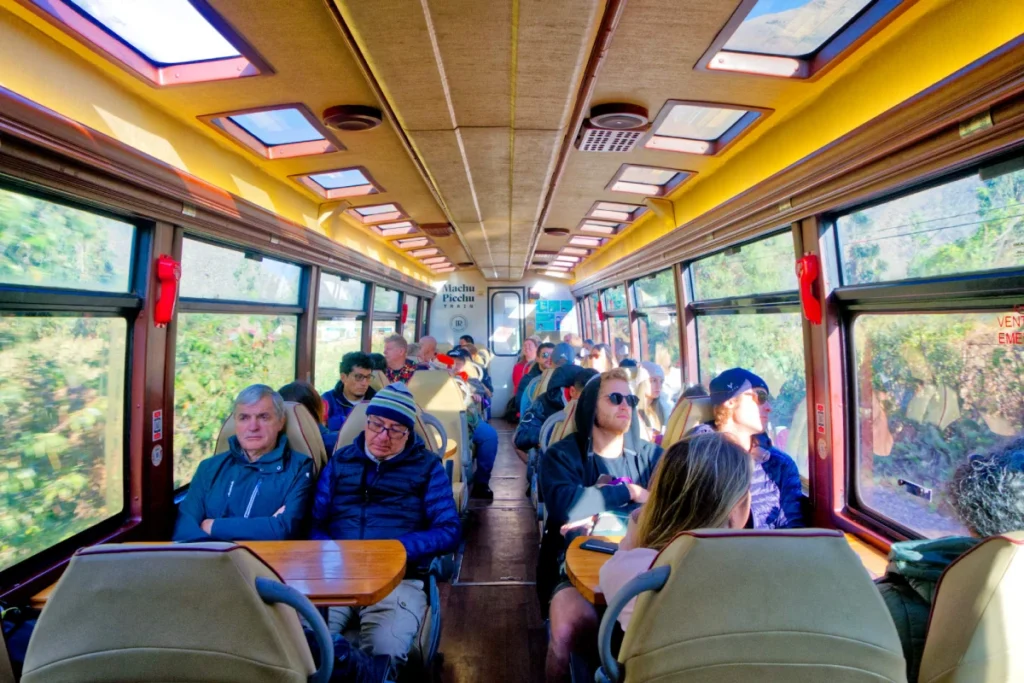
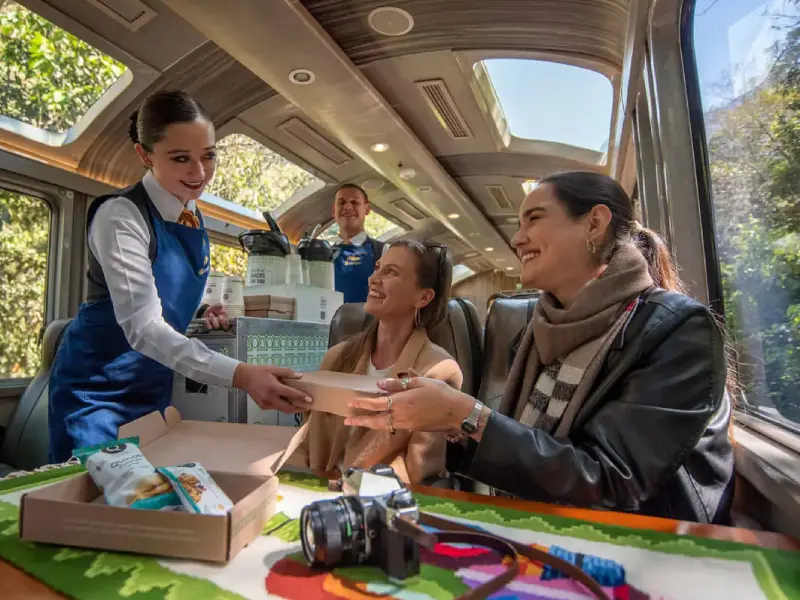
The alternative is taking the train from Cusco, Ollantaytambo, or Poroy to Aguas Calientes (Machu Picchu Pueblo). The ride itself is part of the experience: the train runs alongside the Urubamba River, weaving through mountains and lush vegetation, with large panoramic windows. From Aguas Calientes, a bus takes about 25 minutes to climb up to the entrance of the citadel.
It’s a comfortable, relaxed option accessible to almost anyone, with no physical preparation or gear to carry. For full details on schedules, stations, and prices, see our guide on how to get to Machu Picchu by train.
When it comes to choosing, three factors usually matter more than anything else: how much time you have, how much you want to spend, and how much physical effort you’re willing to put in.
If your trip to Peru is short on time, the train is, without question, the more time-efficient choice.
Generally, the classic Inca Trail tends to cost more than the train option, since the price includes porters, specialized guides, campsites, meals throughout the trek, and the special entry permit (limited to a small number of people per day). The train, on the other hand, has a fare that varies depending on the service category (economy, panoramic, or luxury), plus the cost of the bus and the Machu Picchu ticket.
This is where the difference really counts. The Inca Trail involves hiking between 7.5 and 10 miles (12–16 km) a day, with steep climbs above 13,800 feet (4,200 m) — including the famous “Dead Woman’s Pass.” It requires good physical condition and, above all, being well acclimatized to the altitude before you start.
The train, by contrast, requires no physical preparation at all: you only need to be comfortable with a short uphill walk in Aguas Calientes or simply take the bus.
There’s no absolute “best” option — only the option that’s best for a particular kind of traveler.
The Inca Trail is right for you if:
If that sounds like you, take a look at the most popular option: the Inca Trail 4 days, the classic and most complete itinerary.
The train is right for you if:
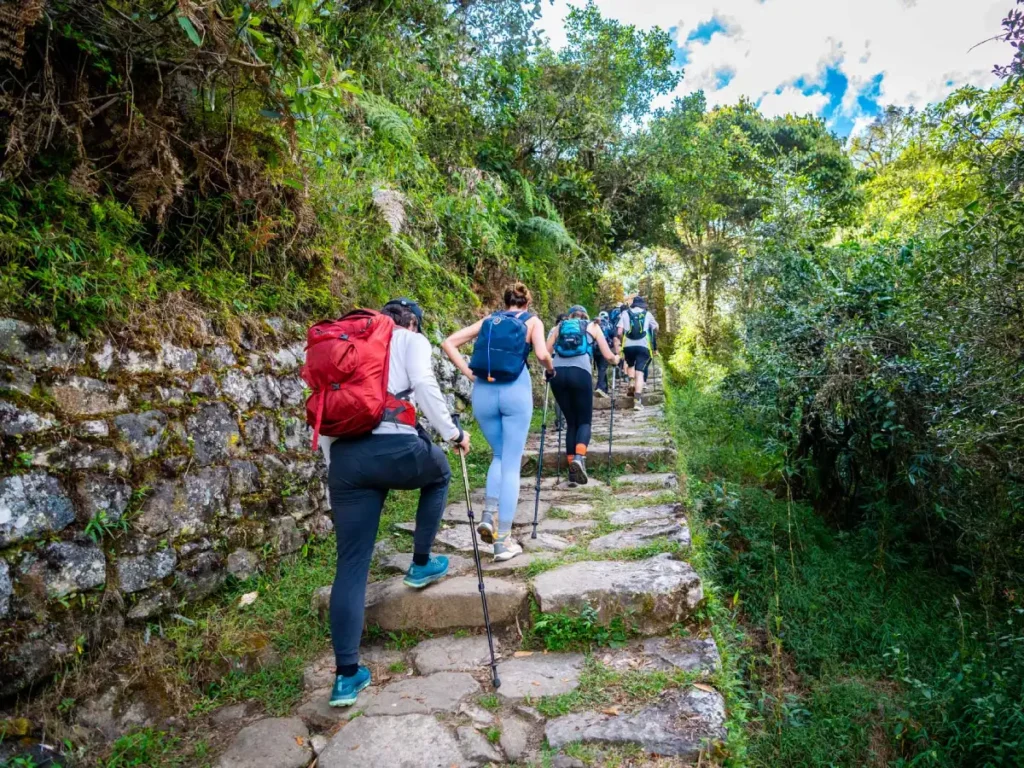
Many travelers don’t realize you don’t have to choose just one option for the entire trip. One of the most popular combinations is hiking the Inca Trail on the way in and returning to Cusco by train, avoiding the physical toll of a return trek and using the extra time to rest.
It’s also possible to do the short 2-day Inca Trail, which includes a more accessible final stretch up to Inti Punku, and then head down by train from Aguas Calientes. This alternative is perfect for those who want to experience part of the trek without committing to the full 4 days.
At Aura Travel Experience, we design personalized itineraries that combine both options based on your dates, fitness level, and interests, so your trip fits exactly what you’re looking for.
The question of whether to hike or take the train to Machu Picchu doesn’t have a universal answer: it depends on your time, your budget, your physical condition, and the kind of experience you want to have. The Inca Trail offers an unforgettable adventure along ancient stone paths and an epic arrival through the Sun Gate. The train, on the other hand, offers comfort, speed, and spectacular scenery with no physical demands.
Whichever you choose, the key is to plan ahead — especially if you go with the Inca Trail, where permits are limited. If you’re still unsure what the best way to get to Machu Picchu is for your specific trip, our team can help you decide.
Ready to map out your ideal route to Machu Picchu? Plan your route with us and build the perfect itinerary based on your time, budget, and appetite for adventure.
También te puede interesar
August wraps up the busiest quarter of the year for the Inca Trail, alongside June and July. It’s...
Leer articulo
July is, along with June and August, one of the busiest months of the year for the Inca...
Leer articulo
If you’re planning a trip to Machu Picchu and your dates fall in February, there’s something important you...
Leer articulo
The Salkantay Trek is one of the most rewarding alternatives to the classic Inca Trail, but it’s also...
Leer articulo
If you’re planning the Salkantay trek, chances are you’ve asked yourself whether it’s worth doing it without a...
Leer articulo
Building a solid Peru itinerary is what separates a trip that flows smoothly from one that turns into...
Leer articulo
If this is your first time planning a trip to South America, it’s completely normal to feel a...
Leer articulo
Figuring out your Peru trip cost is one of the most important steps before booking anything. The good...
Leer articulo