9 min read
52 vistas
How Many Days Do You Need in Cusco
This is probably one of the most common questions among those starting to plan their trip to Peru:...
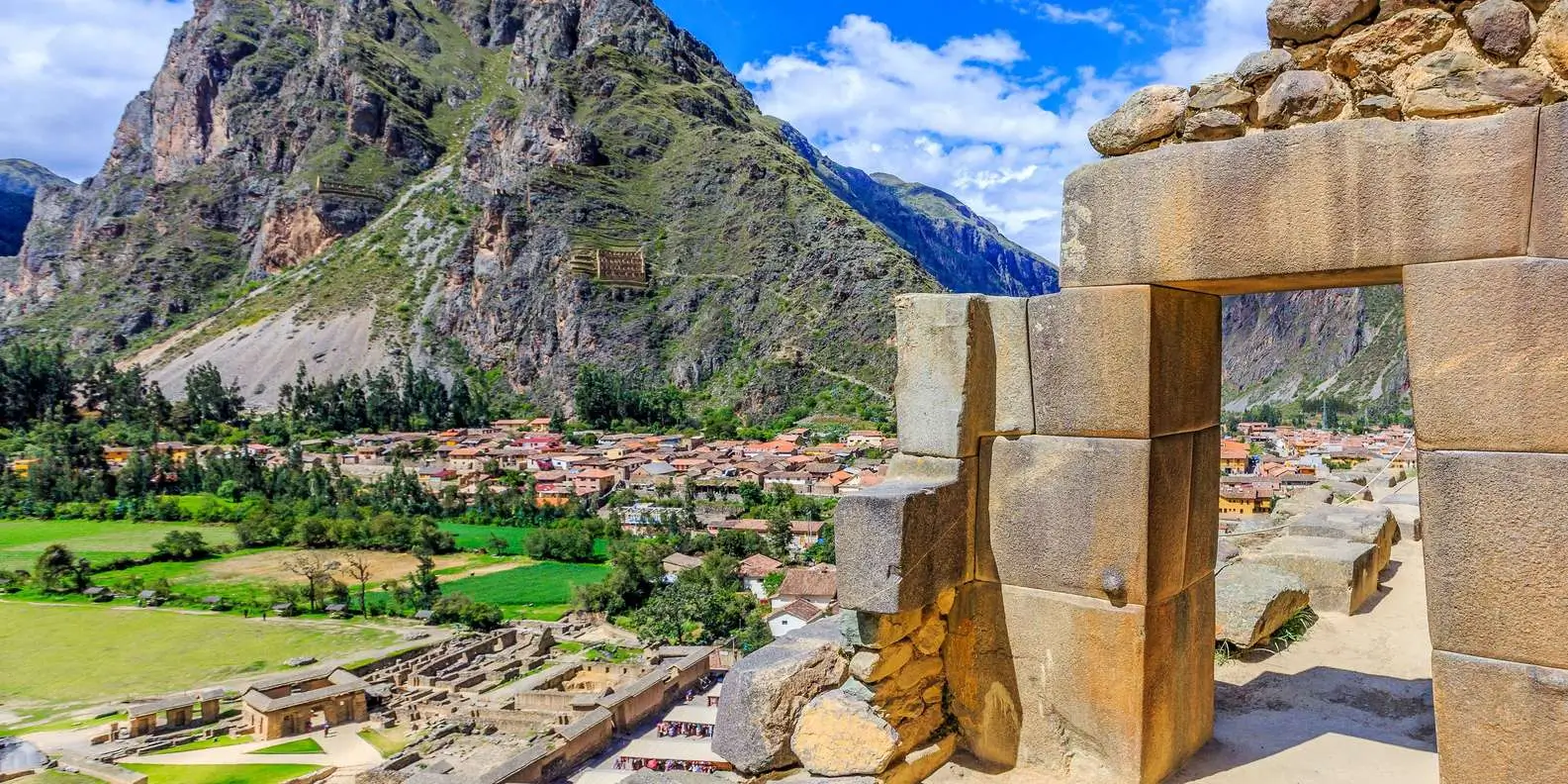
Leer articuloOllantaytambo is, arguably, the most special town in the entire Sacred Valley of the Incas. Unlike other archaeological sites in the region, here you’re not simply visiting ruins: you’re walking down cobblestone streets laid out more than 500 years ago, past water channels that still function today, and houses built on the very same original Inca foundations, many of them inhabited by families who’ve lived there for generations. If you’re planning your trip to the Sacred Valley or your route toward Machu Picchu, this guide covers everything you need to know about this essential destination.
What makes Ollantaytambo truly special is that it’s, according to many historians and archaeologists, the only town of the Inca empire that retains its original urban layout practically intact and remains inhabited to this day. While in other cities across the region Inca structures were left as isolated ruins or were built over by colonial and modern construction, in Ollantaytambo the urban design of the “canchas” (Inca residential units organized around a central courtyard) survives almost unaltered.
Beyond its urban-planning value, Ollantaytambo carries particular historical weight: it was one of the few places where the Incas achieved a significant military victory against the Spanish, during the resistance led by Manco Inca in 1537. The fortress that dominates the town from above was, precisely, the setting for that battle, adding an extra layer of historical significance to the visit.
This combination of living architecture, history, and an atmosphere that genuinely feels different from other tourist destinations in the Sacred Valley is what makes Ollantaytambo a must-stop, and not just a point of transit on the way to Machu Picchu.
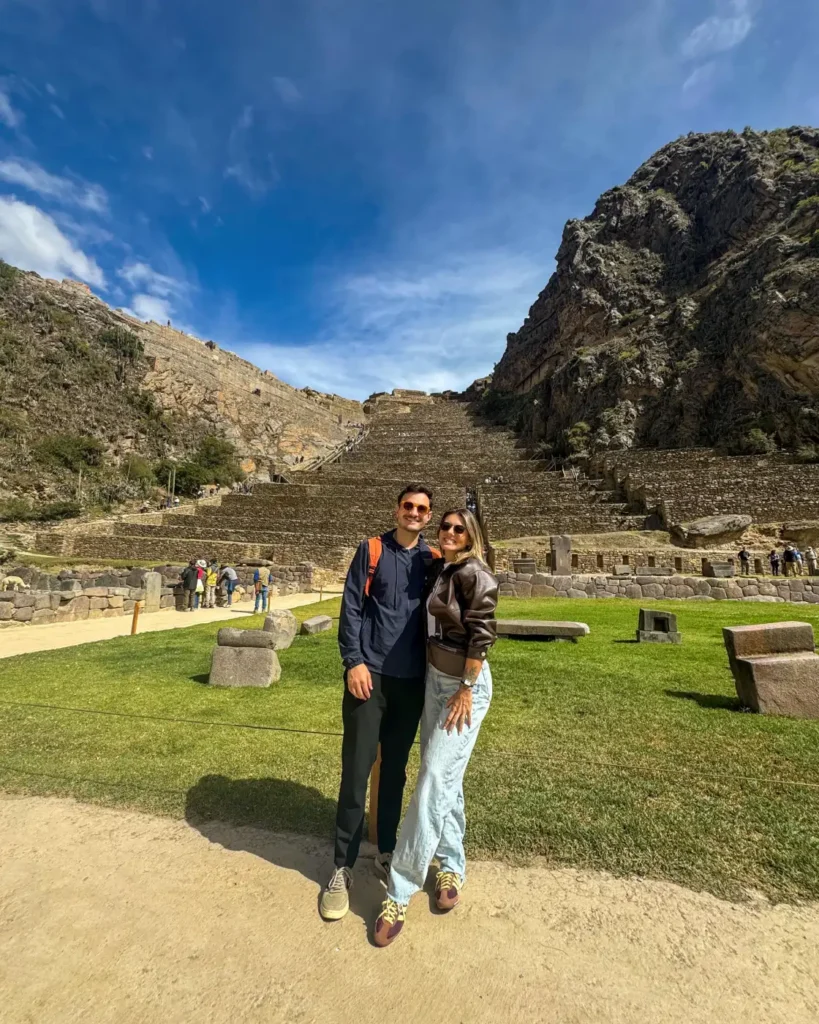
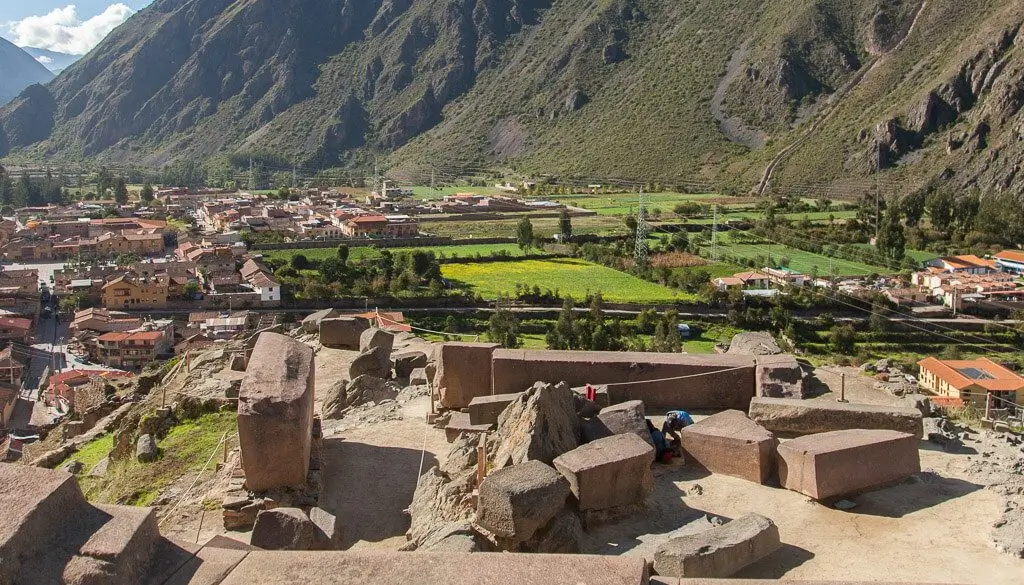
The archaeological complex of Ollantaytambo, popularly known as “the fortress,” rises in a series of stepped terraces climbing up the mountainside, offering one of the most impressive views in the entire Sacred Valley. Climbing to the top of the complex involves a considerable ascent up stone steps, but the reward is a panoramic view of the town, the valley, and the surrounding mountains that’s absolutely worth the effort.
Among the site’s standout features is the Temple of the Sun, an unfinished structure built with enormous, perfectly fitted blocks of pink stone, brought from a quarry located several kilometers away, on the opposite side of the valley. The fact that these monumental stones were transported and raised to that height without modern technology remains a subject of study and astonishment among archaeologists.
The site also includes a sophisticated system of agricultural terraces, irrigation channels, and ceremonial structures, all designed with the precision characteristic of Inca engineering. From the top of the fortress, you can also make out formations on the opposite mountain that some interpret as face-like or figure-like shapes carved into the rock, though this point remains debated among specialists.
We recommend setting aside at least 1.5 to 2 hours to explore the archaeological site at a relaxed pace, ideally with a guide who can explain the historical and architectural context of each sector.
Beyond the fortress, Ollantaytambo’s true treasure lies in its streets. The original urban layout is organized into rectangular blocks known as “canchas,” each with a single street entrance leading to a central courtyard surrounded by dwellings, exactly as they were designed in Inca times. Walking down these narrow streets, with water channels running alongside them (many still functional, fed by the same original hydraulic system), is an experience that transports you straight back in time.
It’s well worth wandering unhurriedly through these little streets, browsing the small local shops, and taking a close look at the mixed architecture combining Inca foundations with colonial and modern construction built on top of them. The town’s main plaza, surrounded by restaurants and craft shops, is a good reference point for getting your bearings and also a pleasant place to take a break.
Ollantaytambo also keeps living traditions alive: local markets with Andean products are common, and during certain dates on the festive calendar, rituals and celebrations take place that keep the connection to ancestral Andean worldview very much alive.
Ollantaytambo sits roughly 1.5 to 2 hours by car from Cusco, forming part of the classic route through the Sacred Valley. The most common way to get there is as part of a full-day tour of the valley, which usually also includes other major sites like Pisac and Chinchero, or via private or shared transportation directly from Cusco.
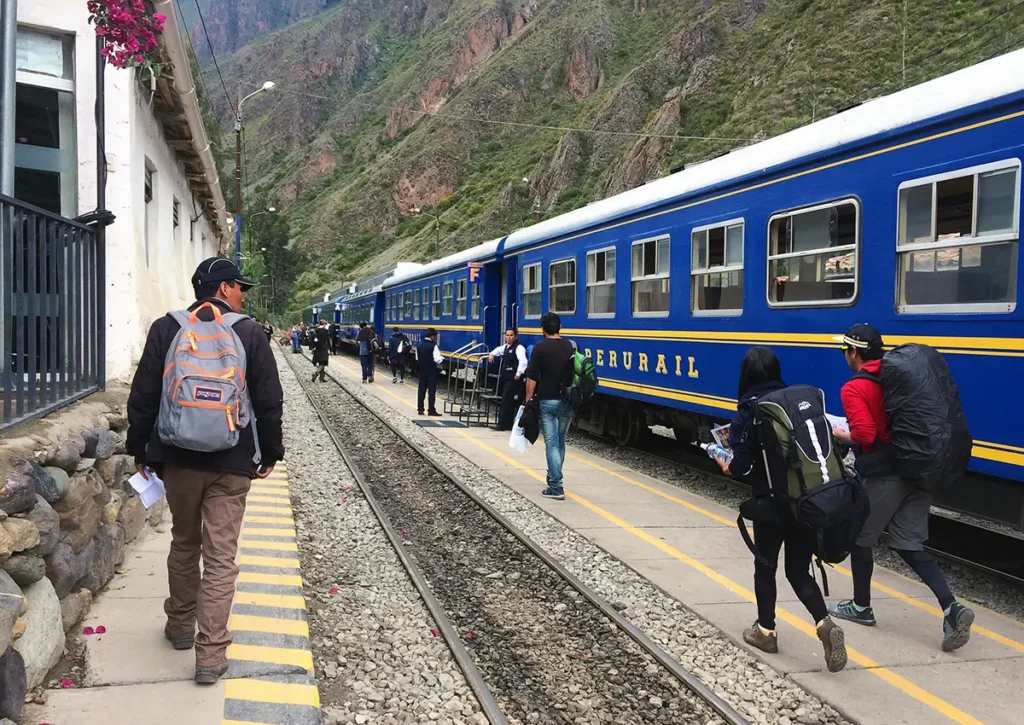
If your plan is to combine the visit with your trip to Machu Picchu, it’s important to know that Ollantaytambo is also one of the main departure points for trains to Aguas Calientes, making it a strategic stop within any itinerary that includes the Inca citadel. To better understand how this town fits into the broader Sacred Valley route, check out our guide to the Sacred Valley of the Incas, where we detail how to combine Ollantaytambo with other nearby destinations.
The ideal length of your visit to Ollantaytambo depends on your overall itinerary, but as a general reference:
If your itinerary includes several days in the region and you want to build in Ollantaytambo more fully, check out our Cusco & Machu Picchu in 6 days package, which allows enough time to enjoy the Sacred Valley without rushing.
For the vast majority of travelers, Ollantaytambo serves another essential role: it’s the main train station from which you access Machu Picchu (along with the Poroy station near Cusco, though Ollantaytambo generally offers more frequent departures and schedule options). From here, trains follow the Urubamba River canyon down to Aguas Calientes, the base town for visiting the citadel.
Because of this strategic function, many travelers combine their visit to the ruins and the town with catching the train the same day, or else spend the night in Ollantaytambo to take an early train the following morning without the pressure of traveling long distances from Cusco. This second option tends to be the more recommendable one if you want to avoid an extremely early wake-up or if you’d rather explore the town more calmly before continuing your trip.
If you need more details on schedules, service types, and how to plan this leg of your trip, check out our complete guide on how to get to Machu Picchu by train, where we cover the different stations and available options.
Before your visit to Ollantaytambo, keep these practical tips in mind:
If you want to dig deeper into the other destinations you can combine with this visit, be sure to check out our Cusco travel guide, where you’ll find complete information on how to organize your itinerary in the region.
Ollantaytambo is, without exaggeration, one of the most fascinating places in the entire Sacred Valley: a monumental fortress, an Inca town that’s still living and breathing, and the gateway to Machu Picchu, all in a single destination. Whether you visit it as a quick stop on your route to the citadel or dedicate a full day to exploring it at leisure, it’s an experience you won’t want to miss.
Ready to explore the Sacred Valley? Explore the Sacred Valley with us through our Peru packages, and we’ll help you design an itinerary that includes Ollantaytambo and the rest of the region’s treasures.
También te puede interesar
This is probably one of the most common questions among those starting to plan their trip to Peru:...
Leer articulo
If you’re planning your visit to Cusco, you’ve likely come across the term “Tourist Ticket” more than once....
Leer articulo
Just a few minutes from Cusco’s Plaza de Armas, on the hills overlooking the city from above, sits...
Leer articulo
In the Sacred Valley of the Incas, just a short distance from one another, sit two of the...
Leer articulo
Pisac is one of those Sacred Valley destinations that manages to combine, in a single day’s visit, two...
Leer articulo
If you’ve been researching the famous rainbow mountains near Cusco, you’ve probably already come across Vinicunca, the Rainbow...
Leer articulo
If you’ve already secured your Machu Picchu ticket and are thinking about adding an extra hike up one...
Leer articulo
If you’re planning your visit to Machu Picchu, you’ve probably run into a term that causes quite a...
Leer articulo